
How to Value a Small Business for Acquisition in Singapore: A Practical Guide for Buyers
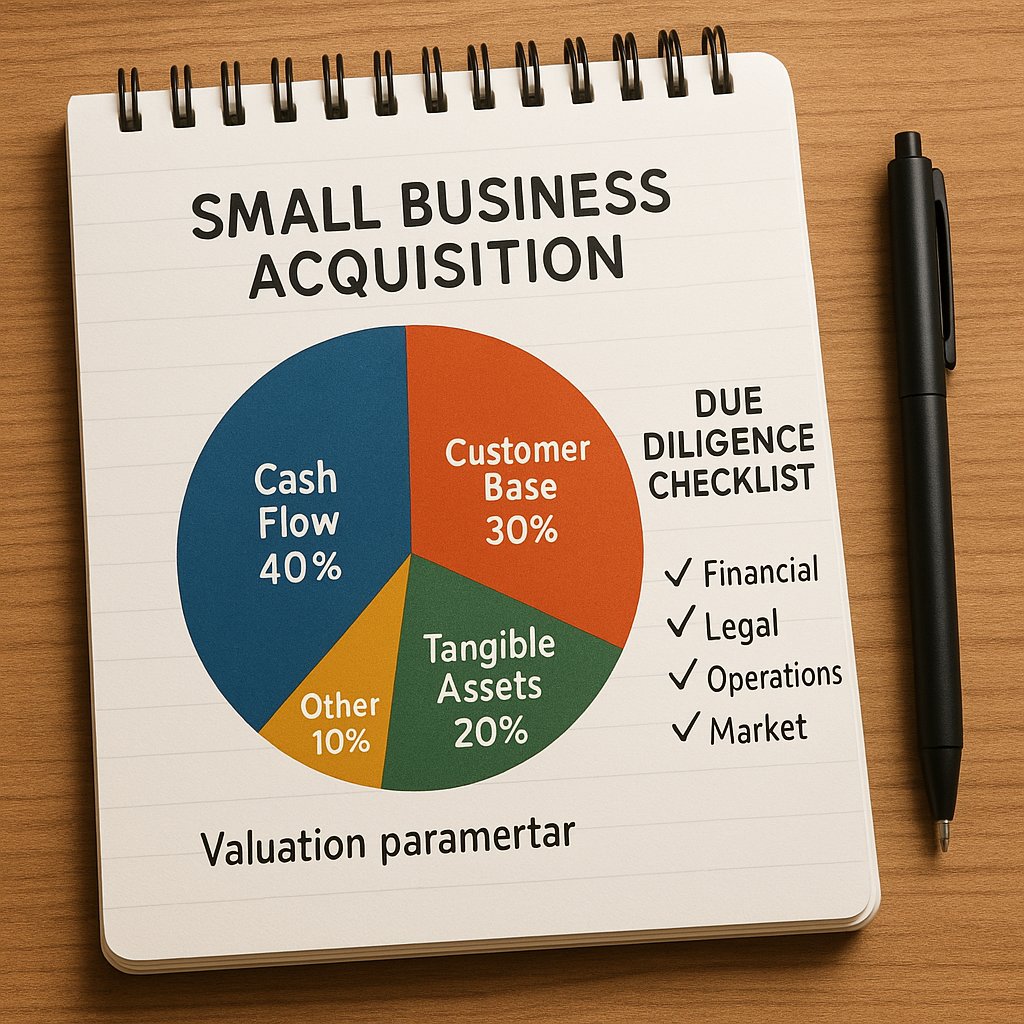
Key Takeaways
- Calculate the business’s value using multiple methods like discounted cash flow, asset-based, and market comparables.
- Analyze Singapore-specific factors such as local market conditions, regulatory environment, and industry trends.
- Conduct thorough due diligence by reviewing financial statements, legal documents, and operational processes.
- Assess the business’s market position, competitive advantages, and growth potential in the Singapore context.
- Use valuation insights to negotiate terms, including price adjustments based on identified risks and opportunities.
Table of Contents
- Understanding Business Valuation Fundamentals for Singapore Acquisitions
- Key Valuation Methods for Small Business Acquisitions
- Singapore-Specific Factors That Impact Business Valuation
- Due Diligence Process for Accurate Valuation Assessment
- Negotiation Strategies and Final Valuation Considerations
- FAQ
- Work with Bizlah
Understanding Business Valuation Fundamentals for Singapore Acquisitions
Expert Insight: According to PwC’s corporate finance services page, PwCCF Singapore acted as the exclusive lead financial advisor to the Estate of Mr. Lim Tze Jong for the sale of his stake in Dyna-Mac to Hanwha Ocean (https://www.pwc.com/sg/en/services/deals/corporate-finance.html). (www.pwc.com)
Business valuation is the systematic process of determining the economic worth of a company, which becomes particularly crucial when considering an acquisition. Learn more: Sell or Buy a Business.In Singapore’s dynamic market, where numerous opportunities for a business for sale in Singapore exist, understanding valuation fundamentals helps buyers avoid overpayment and identify genuine value.
Professional valuation services, like those offered by PwC Singapore’s Valuations team, provide expert analysis using established methodologies tailored to specific industries. These services handle complex financial analysis for various purposes including transaction advisory, which is essential for acquisitions.
According to Investopedia, there’s no single right way to value a business, but common approaches examine factors like revenue, earnings, cash flow, assets, and market comparables. The appropriate method depends on the industry, business model, and purpose of valuation.
For acquisition purposes in Singapore, valuation serves multiple critical functions: establishing a fair purchase price, supporting financing applications, identifying potential risks and opportunities, and providing a benchmark for post-acquisition performance measurement. Unlike valuations for tax or reporting purposes, acquisition valuations must consider strategic synergies and integration costs that will affect the actual value to you as the buyer.
Key Valuation Methods for Small Business Acquisitions
When evaluating a business for sale in Singapore, buyers typically employ one or more of these primary valuation approaches, each with distinct advantages for different business types:
- Income-Based Approaches: These methods focus on the business’s ability to generate future economic benefits. The most common is the Discounted Cash Flow (DCF) method, which projects future cash flows and discounts them to present value using an appropriate rate that reflects risk. Another income approach is capitalization of earnings, which divides normalized earnings by a capitalization rate. These methods work well for businesses with predictable cash flows and are particularly relevant for service businesses and companies with strong recurring revenue models.
- Market-Based Approaches: This methodology compares the target business to similar companies that have recently sold. You’ll examine multiples like price-to-earnings (P/E), price-to-sales, or EBITDA multiples from comparable transactions. In Singapore’s market, finding truly comparable transactions can be challenging for unique small businesses, but this approach provides real-world market context. Professional advisors like KPMG’s deal advisory teams maintain databases of transaction comparables specific to the Singapore market.
- Asset-Based Approaches: This method calculates value based on the company’s net asset value (assets minus liabilities). The adjusted net asset method values all assets and liabilities at fair market value rather than book value. This approach is most appropriate for asset-intensive businesses or when considering liquidation scenarios, but often undervalues intangible assets and future earnings potential.
- Industry-Specific Rules of Thumb: Many industries have established valuation multiples based on revenue, units, or other metrics. For example, F&B businesses might be valued at a multiple of weekly revenue, while professional practices might use a multiple of annual billings. These provide quick benchmarks but should be supplemented with more rigorous analysis.
Most sophisticated acquisitions in Singapore use a combination of these methods to triangulate a reasonable value range. The PwC Corporate Finance team, which has advised on numerous Singapore transactions including the sale of Dyna-Mac to Hanwha Ocean and Food Junction to BreadTalk Group, typically employs blended methodologies to account for Singapore’s unique market conditions.
Singapore-Specific Factors That Impact Business Valuation
Valuing a business in Singapore requires consideration of several jurisdiction-specific factors that significantly influence worth:
- Regulatory Environment: Singapore’s business-friendly regulations generally enhance valuation, but specific licenses (for F&B, financial services, education, etc.) can dramatically affect value. The transferability of these licenses during acquisition must be verified, as non-transferable licenses may render a business essentially worthless to a new owner.
- Tax Considerations: Singapore’s competitive tax regime (corporate tax rate of 17%) typically supports higher valuations compared to higher-tax jurisdictions. However, as noted by PwC’s M&A tax specialists, deal structuring for tax efficiency can significantly impact net acquisition value. Proper planning can safeguard valuable tax assets and enhance long-term deal value.
- Market Position and Competition: Singapore’s small but highly competitive market means market share and competitive advantages carry disproportionate weight. A business with strong branding, customer loyalty, or unique intellectual property in Singapore’s concentrated market may command premium valuation multiples.
- Real Estate Considerations: For businesses with physical locations, lease terms critically impact valuation. Favorable rental rates, long lease tenures with renewal options, and good locations add substantial value, while unfavorable lease terms can significantly diminish business worth.
- Workforce Factors: Singapore’s tight labor market and dependency on foreign workers mean that businesses with stable, skilled local teams and proper employment pass allocations are more valuable. Retention plans for key staff should be factored into acquisition valuations.
- Regional Hub Potential: Many Singapore businesses serve as springboards to Southeast Asian markets. Businesses demonstrating successful regional expansion or clear potential for such growth command valuation premiums reflecting this strategic positioning.
These Singapore-specific factors explain why local expertise is invaluable when valuing a business for sale in Singapore. Advisors familiar with both local business nuances and global standards, like those referenced in the PwC materials, can identify value drivers and risks that generic valuation approaches might miss.
Due Diligence Process for Accurate Valuation Assessment
Thorough due diligence transforms theoretical valuation into grounded assessment. When evaluating a business for sale in Singapore, these due diligence areas are particularly critical:
Financial Due Diligence: Beyond reviewing financial statements, examine quality of earnings by identifying non-recurring items, owner benefits, and revenue recognition practices. Analyze working capital requirements and cash conversion cycles specific to Singapore’s market conditions. Verify tax compliance with Singapore’s IRAS, as undisclosed tax liabilities can significantly impact net valuation.
Legal and Regulatory Due Diligence: Confirm corporate structure compliance with ACRA regulations, validate ownership of all assets, and review material contracts for change-of-control provisions. For businesses with physical premises, scrutinize URA zoning compliance and tenancy agreements. Verify all necessary licenses and permits are valid and transferable to a new owner.
Operational Due Diligence: Assess the strength of management and key personnel, supplier relationships (especially given Singapore’s import dependency), and operational systems. Evaluate technology infrastructure and cybersecurity measures, which are increasingly important in Singapore’s digital economy.
Commercial Due Diligence: Analyze customer concentration risk (particularly problematic in Singapore’s small market), competitive positioning, and market growth potential. Validate the seller’s claims about market share and growth projections against independent market data.
Synergy Assessment: If you’re acquiring to create strategic synergies with existing operations, quantify these benefits separately from standalone business value. Common synergies in Singapore acquisitions include cross-selling opportunities, overhead reduction, and combined purchasing power.
Professional advisors bring structured methodologies to this process. As illustrated by PwC’s work on transactions like the acquisition of OJJ Holdings by FairPrice Group and the sale of Argus Group to Waystone Group, systematic due diligence identifies issues that affect valuation, from hidden liabilities to unrealized opportunities.
Negotiation Strategies and Final Valuation Considerations
Valuation establishes a range, but final price determination occurs through negotiation. When pursuing a business for sale in Singapore, consider these negotiation strategies informed by valuation analysis:
Earn-Out Structures: Bridge valuation gaps by tying portion of purchase price to future performance. This aligns interests during transition and accounts for uncertainty in projections. In Singapore’s market, where many small businesses are owner-dependent, earn-outs can mitigate key person risk.
Working Capital Adjustments: Most Singapore acquisitions include working capital adjustments to ensure the business has appropriate operational capital at closing. Define target working capital levels and adjustment mechanisms clearly in the purchase agreement.
Representations and Warranties: Valuation assumes certain facts about the business. Representations and warranties provide recourse if these facts prove inaccurate. Consider warranty escrows or insurance to address post-closing valuation adjustments.
Deal Structuring for Tax Efficiency: As highlighted by tax advisory services, structuring the acquisition as asset purchase versus share purchase has significant valuation implications in Singapore. Asset purchases may allow step-up in tax basis for depreciation, while share purchases may preserve tax attributes and licenses.
Financing Considerations: Your financing availability affects negotiation position. Singapore banks typically finance 50-70% of acquisition value for established businesses, requiring you to demonstrate how valuation supports debt service. Seller financing, common in Singapore small business transactions, can bridge valuation gaps but requires careful structuring.
Final Integration Costs: The truest valuation accounts not just for purchase price but total cost of ownership including integration expenses. Factor in costs for systems integration, rebranding, staff retention bonuses, and regulatory compliance changes specific to Singapore.
Ready to apply these valuation principles to your acquisition search? Explore verified businesses for sale in Singapore with complete financial disclosures to begin your valuation analysis.
Remember that valuation is both art and science—the numbers provide the framework, but judgment about Singapore’s market dynamics, competitive landscape, and growth potential ultimately determines what a business is worth to you as a buyer. Whether you’re considering a neighborhood retail establishment or a technology startup, disciplined valuation protects your investment and positions your acquisition for success in Singapore’s competitive business environment.
FAQ
Q: What are the most common valuation methods for small businesses in Singapore?
A: The most common methods include the discounted cash flow (DCF) approach, which projects future earnings, and the market approach, comparing the business to similar ones sold recently. Asset-based valuation is also used, especially for businesses with significant tangible assets.
Q: How do Singapore-specific factors like government grants or regulations affect business valuation?
A: Government grants, such as those from Enterprise Singapore, can boost a business’s value by enhancing its financial stability and growth prospects. Compliance with local regulations, like the Companies Act, is crucial to avoid legal risks that could lower valuation.
Q: What financial documents should I review during due diligence for a Singapore business acquisition?
A: Key documents include profit and loss statements, balance sheets, cash flow statements, and tax filings from the past 3-5 years. Also, review any outstanding debts, contracts, and revenue projections to assess financial health accurately.
Q: How can I assess the growth potential of a small business in Singapore before acquisition?
A: Evaluate market trends, customer base diversity, and the business’s competitive advantages. Analyze historical growth rates and future plans, such as expansion into new markets or product lines, to estimate potential returns.
Q: What are effective negotiation strategies for acquiring a small business in Singapore?
A: Start with a fair offer based on thorough valuation and due diligence. Be prepared to justify your price with data, and consider structuring the deal with earn-outs or seller financing to align interests and manage risks.
Related Reading
Work with Bizlah
consultative CTA — explore Sell or Buy a Business.
- Local expertise in Singapore
- End-to-end guidance
- Transparent valuation
Informational only; not financial advice.