
Financing a Business for Sale in Singapore: Bank Loans, Seller Financing, and Alternative Funding Options Explained
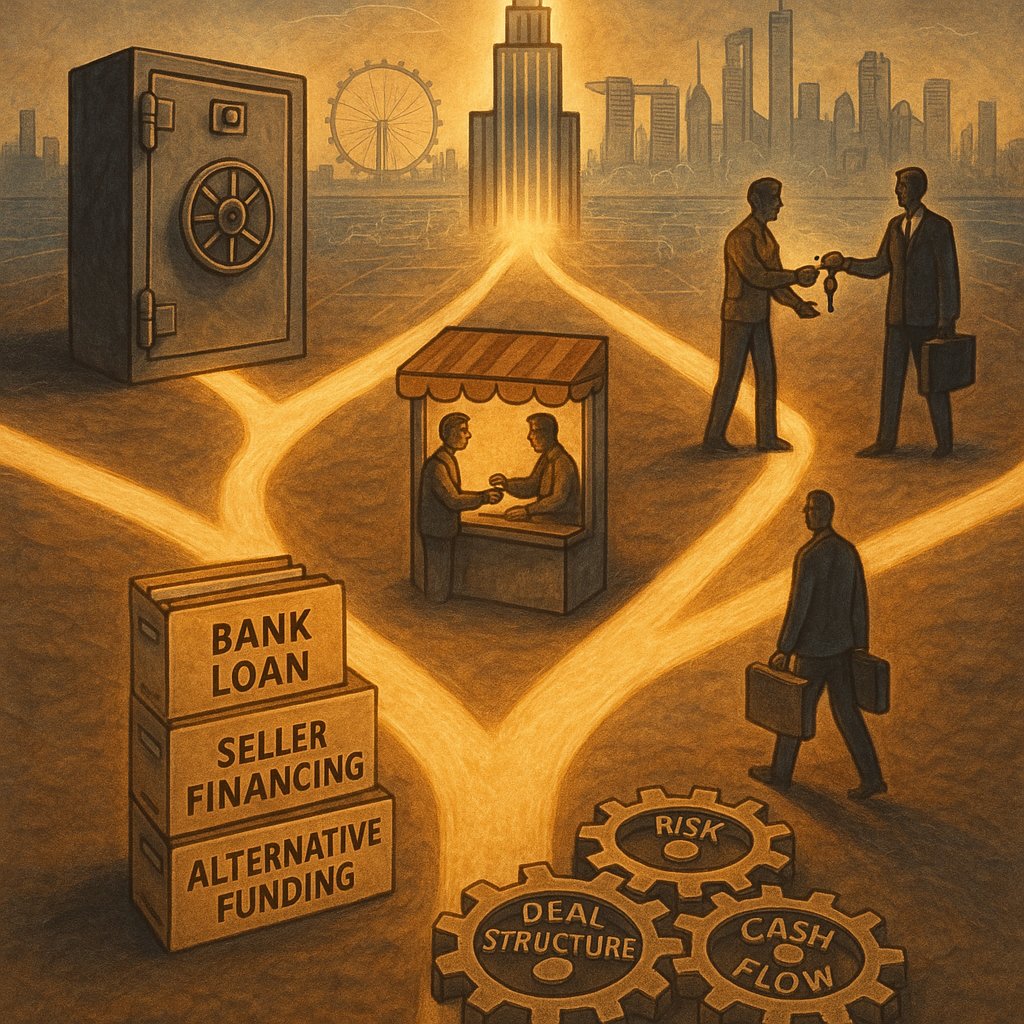
Table of Contents
- Overview: How Financing Shapes Your Business Acquisition Strategy
- Understanding the Deal: What Exactly Are You Financing?
- Using Bank Loans and Government-Backed Schemes to Buy a Business
- Seller Financing: Turning the Current Owner into Your Lender
- Alternative Funding Options Beyond Traditional Bank Loans
- Eligibility, Documentation, and What Lenders Look For in an Acquisition Deal
- Structuring Your Funding Stack: Combining Bank, Seller, and Alternative Finance
- Practical Steps to Secure Financing Before You Commit to a Deal
- FAQ: Financing a Business for Sale in Singapore
- Conclusion: Build a Financing Plan That Supports Both Purchase and Growth
- Work with Bizlah
Overview: How Financing Shapes Your Business Acquisition Strategy
Expert Insight:
According to www.gscredit.com.sg, the best small business loan options in Singapore for 2025 range from government-backed schemes like SME Working Capital and Temporary Bridging Loans to bank term loans from DBS, OCBC and UOB offering up to S$20 million unsecured over five years, provided firms meet criteria such as Singapore registration, at least 30% local ownership and clean financial/tax records. For startups or small side businesses that banks reject, the site notes that licensed moneylenders like GS Credit can serve as a fast personal-loan fallback for micro-funding needs. https://www.gscredit.com.sg/small-business-loans-singapore/(
www.gscredit.com.sg)When you find a promising business for sale in Singapore, the next critical question is: how will you finance the deal? The way you structure your funding affects your cash flow, control, risk, and ultimate returns.
In Singapore, most buyers mix several sources: traditional bank loans, government-backed SME schemes, seller financing from the current owner, and alternative options such as revenue-based financing, private lenders, or even personal loans. Learn more: Sell or Buy a Business.Each comes with different approval criteria, cost of capital, and operational implications after takeover.
This guide explains the main financing routes available when buying a business in Singapore, how banks and other funders assess acquisition deals, and how to combine options into a realistic funding stack that supports both the purchase and post-acquisition growth.
Understanding the Deal: What Exactly Are You Financing?
Before you talk to any lender or investor, you need clarity on what you are actually buying and how the purchase price is structured. That directly shapes your financing needs and eligibility.
Key elements to define up front include:
- Asset purchase vs share purchase– In an asset deal, you buy selected assets (equipment, inventory, IP, customer lists, brand). In a share deal, you take over the whole company, including contracts, employees, and liabilities. Banks and investors typically view share deals as higher risk because of inherited obligations.
- Purchase price breakdown– Distinguish between payment for tangible assets (stock, plant, equipment), intangible assets (brand, goodwill, customer relationships), and any working capital included (cash, receivables, payables).
- Upfront vs deferred payments– Many deals combine a cash down payment with instalments, earn-outs, or performance-based payments. The more deferred or contingent the price, the less immediate financing you may need.
- Vendor loans or seller financing– If the seller is willing to finance part of the price, you can reduce bank borrowing and overall risk. Lenders also view this as a sign that the seller believes in the sustainability of the business.
When browsing platforms like
BusinessForSale.sg, treat the listing price as a starting point. Only after due diligence and a clear structure can you know how much external financing is truly required and how to justify it to lenders.Using Bank Loans and Government-Backed Schemes to Buy a Business
For many buyers, bank loans remain the core funding source. In Singapore, banks and financial institutions offer SME term loans, working capital facilities and, in some cases, acquisition financing that can be applied toward buying an existing business.
Common bank and scheme-based options include:
- Business term loans
Major banks such as DBS, OCBC and UOB provide unsecured term loans that can be used for general business purposes, including acquisitions. These typically offer:- Loan amounts up to several million dollars (often capped based on turnover, profitability and credit profile)
- Tenures up to around five years
- Fixed monthly instalments
- No need for specific collateral, though personal guarantees by directors are common
- SME Working Capital Loan
This government-supported facility is designed to help Singapore-registered SMEs with operating needs, but in practice it can free up cash or complement term loans when you take over a business. Typical features include:- Loan quantum up to about S$1 million (subject to policy changes)
- Tenures of one to five years
- Requirement that at least 30% of the company is locally owned (Singapore Citizen or PR)
- Temporary Bridging Loan and similar schemes
Bridging loans are intended for short-term cash flow needs and are partially backed by the government. They can help smooth cash gaps during transition or refurbishment after you buy the business, rather than fund the acquisition price directly.
According to guides from platforms like
DollarsAndSense, SingSaver, and SME-focused resources such as iBusinessLoan, banks commonly look for:- Singapore registration with ACRA and an operating track record
- At least 30% local shareholding for government-backed schemes
- Annual turnover and staff size within SME limits (for SME-focused products)
- Healthy financial statements and bank records
- Clean tax and legal status of both buyer and target business
If the company you are buying already qualifies for SME facilities, you can acquire the business and then apply for these loans under the new ownership, or combine personal and corporate borrowing during the transition.
Seller Financing: Turning the Current Owner into Your Lender
Seller financing (also called vendor financing) is when the current owner accepts part of the purchase price over time, instead of demanding full cash at completion. This can bridge funding gaps when bank borrowing falls short or is too slow.
Common structures include:
- Fixed-term vendor loan
The seller agrees to receive a defined portion of the price (for example, 20–40%) as a loan. You pay principal and interest over an agreed schedule. This loan can be subordinated to bank debt, which often makes banks more comfortable lending. - Earn-outs
Part of the price is tied to future performance – for example, if revenue or profit targets are met over the next two to three years. This reduces your immediate funding requirement and aligns the final price with actual results. - Retention or holdback
A small proportion of the price is held back for a period (e.g. 12–24 months) to cover any undisclosed liabilities or performance shortfalls. While not financing in the traditional sense, it reduces your upfront capital outlay and protects against nasty surprises.
Benefits of seller financing include:
- Lower upfront cash requirement and less pressure on bank borrowing
- Demonstration that the seller believes in the future of the business
- Increased negotiating room on price and terms
- Possibility of more flexible covenants than banks typically offer
Risks to manage carefully:
- Interest rates may be higher than bank loans
- Seller may demand security, such as a charge on shares or assets
- Complex documentation is required to avoid disputes
- Relationship risk if the seller stays involved day-to-day
Work with a lawyer who understands SME acquisitions in Singapore to draft clear loan agreements, repayment schedules, and security documents. Ensure the vendor loan terms fit comfortably within the projected cash flow of the business after acquisition.
Alternative Funding Options Beyond Traditional Bank Loans
Not every buyer will qualify for large bank loans, especially if you are a first-time owner or if the target business has short history or inconsistent financials. In these cases, alternative funding can help you complete the purchase or support working capital after takeover.
Commonly used alternatives in Singapore include:
- Non-bank business loans from licensed moneylenders
Licensed moneylenders such as GS Credit, Raffles Credit, and Bugis Creditoffer smaller business loans or personal loans that can support acquisitions or immediate cash needs. Approval is often faster and more flexible than banks, but interest rates are typically higher, so they are better for short-term gaps than long-term funding. - Fintech and revenue-based financing
Providers like Choco Upspecialise in non-dilutive growth capital, especially for e-commerce and recurring-revenue businesses. Funding is repaid as a share of future revenue, which can be attractive if you are buying an online or subscription business with predictable sales. - Invoice financing and factoring
If the business you are buying has substantial receivables from reputable clients, you can finance those invoices to unlock cash. This is more of a post-acquisition working capital tool but can indirectly help you service acquisition debt. - Asset-based loans
Where the target owns valuable assets (vehicles, machinery, equipment), lenders may offer loans secured against those assets. This can supplement general term loans and reduce the need for personal guarantees. - Personal loans and lines of credit
When business-track-record requirements are hard to meet, some buyers opt for personal loans from banks or licensed lenders. Platforms such as Lending Bee, Livelihoods.org, and SingSaverprovide comparisons. Personal loans are generally smaller but may fund the down payment or initial working capital.
When using alternative funding, always balance speedagainst cost. Higher interest or revenue-sharing obligations can squeeze your margins if not matched to realistic post-acquisition cash flows.
Eligibility, Documentation, and What Lenders Look For in an Acquisition Deal
Whether you are approaching a bank, government-backed scheme, or alternative lender, the fundamentals of credit assessment are similar. They want to know if you can repay on time, and if the business you are buying will generate sufficient predictable cash flow.
Core eligibility criteria typically include:
- Business registration and ownership
The company must be registered in Singapore with ACRA, and at least 30% locally owned if you are tapping SME schemes. For a share purchase, lenders will look at the existing entity; for an asset purchase, they will assess your acquiring entity. - Financial performance
Lenders expect to see at least 6–24 months of bank statements and financials. According to multiple Singapore loan guides, stable revenue, positive net profit, and clean GST/IRAS track records materially improve approval odds. - Industry and business model
Some sectors (e.g. F&B, retail) are seen as higher risk due to manpower and rental volatility, while others (e.g. essential services, B2B contracts) may be more attractive to lenders. Demonstrate why this particular business is resilient. - Buyer profile and experience
Your personal credit history, professional background, and experience in the industry matter. Lenders are more comfortable when the buyer has a relevant track record and is financially disciplined. - Debt-service capacity
Lenders will stress-test whether the business can service the combined debt: bank loans, vendor financing, and any alternative funding. Sensible leverage with comfortable interest coverage is crucial.
Prepare a professional acquisition package that includes:
- Company profile and background of the business for sale in Singapore
- Last 2–3 years of financial statements and latest management accounts
- Bank statements for at least 6–12 months
- Breakdown of purchase price, payment terms, and any seller financing
- Your business plan for the first 12–36 months, with conservative cash-flow projections
- Details of securities offered (personal guarantees, charges on assets or shares)
Well-organised documentation not only speeds up approval; it also signals to the seller that you are a serious, well-prepared buyer.
Structuring Your Funding Stack: Combining Bank, Seller, and Alternative Finance
Few acquisitions are funded by a single source. A pragmatic approach is to design a blended or layered structure that balances cost, control, and risk. For example:
- Scenario 1: Bank-led with seller support
Suitable for stable, profitable SMEs with clear financials.- 60–70%: Bank term loan or SME Working Capital Loan
- 20–30%: Vendor loan from seller, subordinated to bank debt
- 10–20%: Buyer equity (savings, investors, or personal loan)
This structure keeps the cost of capital moderate while ensuring the seller shares some ongoing risk.
- Scenario 2: Alternative-finance-heavy for growth businesses
Suitable for e-commerce or tech-enabled businesses with strong but short track records.- 40–50%: Bank or non-bank term loan (possibly smaller due to limited history)
- 20–30%: Revenue-based financing (e.g. for online marketing and inventory)
- 20–30%: Vendor loan and/or earn-out
This mix can be attractive where traditional collateral is limited, but growth is strong and measurable.
- Scenario 3: Smaller deals or first-time buyers
For smaller acquisitions or side businesses.- 30–50%: Personal savings or personal loans
- 20–40%: Licensed moneylender business or personal loans with short tenure
- 20–30%: Seller financing
Here, disciplined cash-flow management is essential to avoid over-leverage.
Whichever mix you choose, keep these principles in mind:
- Match debt tenures to the stability of the cash flow and asset life
- Avoid stacking multiple high-interest facilities on top of each other
- Stress-test your plan with conservative revenue assumptions
- Check covenants and default clauses carefully across all lenders
If you are comparing options for your acquisition or for the business you already own, you can explore structured financing support through Bizlah’s partner network at
this complete guide to business finance in Singapore.Practical Steps to Secure Financing Before You Commit to a Deal
Financing should move in parallel with your deal-making, not come as an afterthought. A simple step-by-step approach can reduce last-minute surprises.
- Define your budget and risk tolerance
Know how much of your own capital you are willing to invest, your maximum comfortable monthly repayment, and the return you expect from the business. - Shortlist target businesses with finance-ability in mind
Look for businesses with clean books, verifiable revenue, and preferably recurring customers. This makes lender approval far smoother than deals built on unrecorded cash or weak documentation. - Run preliminary numbers with lenders
Before signing a binding sale and purchase agreement, speak to banks, SME loan consultants, or comparison platforms (like those run by SingSaveror DollarsAndSense) to gauge how much you are likely to qualify for. - Negotiate seller terms with financing in mind
Ask explicitly whether the seller is open to vendor financing, earn-outs, or deferred payments. The more flexible they are, the less external financing you may need. - Prepare a realistic post-acquisition plan
Include integration steps, key hires, marketing plans, and systems improvements. Lenders and sellers are more willing to back buyers with a clear operational roadmap. - Lock in conditional approvals before final signing
Where possible, get in-principle approvals or term sheets from lenders so you can sign the acquisition agreement with confidence that funds will be available for completion.
By aligning your financing timeline with your deal timeline, you reduce the risk of losing a good business for sale in Singapore simply because the money was not ready in time.
FAQ: Financing a Business for Sale in Singapore
1. Can I use an SME loan to buy a business for sale in Singapore?
Yes, in many cases SME term loans and working capital loans can be used to fund acquisitions or to refinance shareholder loans after takeover, as long as the loan purpose and business cash flow satisfy the bank’s criteria. It is important to be transparent about the intended use of funds when you apply.
2. How much down payment do I typically need to buy a small business?
There is no fixed rule, but many lenders and sellers expect buyers to contribute at least 20–30% of the purchase price from their own capital or equity investors. The stronger your own contribution, the more negotiating power you have with banks and with the seller on interest rates and repayment terms.
3. Is seller financing common in Singapore SME deals?
Seller financing is increasingly common, especially for deals under S$5 million. It helps bridge funding gaps and reassures the buyer that the seller is confident in the business. However, not all owners are comfortable acting as lenders, so it needs to be discussed early in negotiations.
4. Can foreigners get financing to buy a Singapore business?
Yes, but it is often more complex. Foreign buyers may face additional scrutiny on source of funds, local shareholding, and experience. Some government-backed SME schemes require at least 30% local ownership, so foreign buyers may need a local partner or to structure the deal carefully. Private lenders and alternative finance providers may be more flexible but usually at higher cost.
5. Should I use personal loans to finance a business acquisition?
Personal loans can be useful for smaller deals or to fund the deposit and professional fees, but they are generally not ideal as the main funding source for a large acquisition due to limited quantum and potentially higher interest. Always ensure that your total personal liabilities remain manageable even if the business underperforms.
6. How do I avoid over-leveraging when buying a business?
Stress-test your financial model with conservative revenue and profit assumptions, aiming for comfortable interest coverage and the ability to withstand a few months of slower sales. Avoid stacking multiple high-interest facilities, and use seller financing or equity investors where necessary to keep your total debt load at a sustainable level.
Conclusion: Build a Financing Plan That Supports Both Purchase and Growth
Financing a business for sale in Singapore is not just about securing the largest loan possible; it is about assembling a funding mix that the business can safely support over time. Traditional bank loans and government-backed schemes offer attractive rates if you and the target business meet their criteria. Seller financing and earn-outs can bridge gaps and align incentives. Alternative lenders and revenue-based options provide flexibility when banks say no, though at a higher cost.
The strongest acquisition plans treat financing as part of the overall deal strategy: you choose what to buy, how much to pay, and how to structure payments in a way that preserves cash flow for operations and growth. With careful preparation, realistic projections, and a balanced funding stack, you can move from browsing listings to confidently closing on the right business for sale in Singapore.
Related Reading
Work with Bizlah
consultative CTA — explore Sell or Buy a Business.
- Local expertise in Singapore
- End-to-end guidance
- Transparent valuation
Informational only; not financial advice.