
SME Valuation in Singapore (2025): Benchmarks, Intangibles, and Deal‑Ready Normalisations
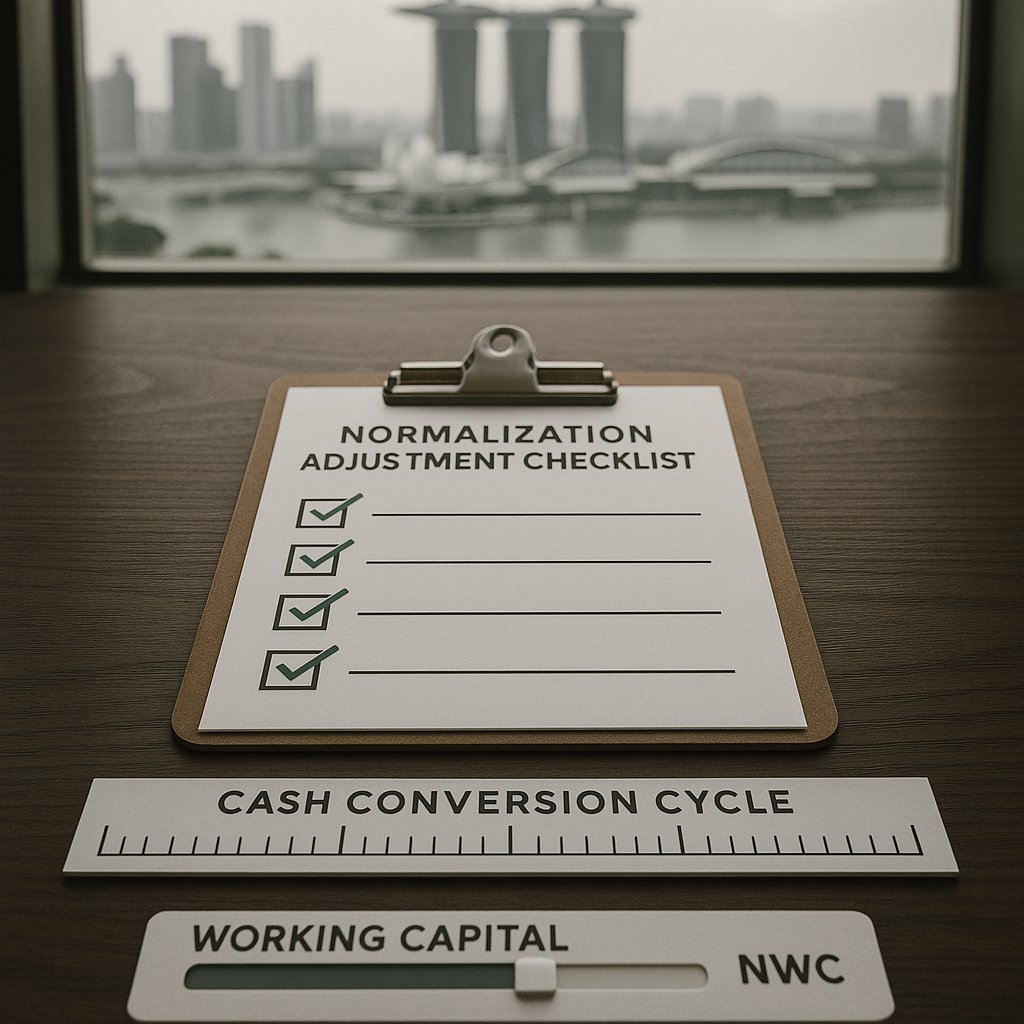

Table of Contents
- Overview: Why SME Valuation in Singapore Looks Different in 2025
- 2025 Macro Context: What the Singapore Outlook Means for Valuations
- Core Valuation Methods for Singapore SMEs (and When Each Works)
- 2025 Benchmark Multiples: What the Singapore Market Is Paying
- Intangibles That Actually Move the Valuation Needle in 2025
- Deal‑Ready Normalisations: Cleaning Up Your Numbers Before a Valuation
- Using Valuation to Plan Exits, M&A, and Financing in 2025
- Practical Steps to Lift Your SME Valuation Over the Next 12–24 Months
- How Buyers Use Valuation When Scanning a Business for Sale in Singapore
- FAQ: SME Valuation in Singapore (2025)
- Work with Bizlah
Overview: Why SME Valuation in Singapore Looks Different in 2025
Expert Insight:
According to InvoiceInterchange, economists forecast Singapore’s GDP to grow by a steady 2.6% in 2025, creating a generally business-friendly environment where SMEs can confidently plan for expansion, new products, or market entry if they maintain strong financial strategies to support that growth (https://www.invoiceinterchange.com/singapores-economic-outlook-for-2025-implications-for-smes/). (www.invoiceinterchange.com)
SME valuation in Singapore has always been shaped by our compact market, high costs, and strong regulatory environment. Learn more: Sell or Buy a Business.In 2025, it is also being reshaped by AI adoption, digitalisation grants, and a more active mergers and acquisitions (M&A) landscape driven by Budget 2025 reforms.
For owners planning an exit or fundraising, and buyers looking for a business for sale in Singapore, this means one thing: traditional, back-of-the-envelope valuations are no longer enough. You now need a clear, defendable valuation story anchored in benchmarks, properly captured intangibles, and rigorous normalisation of your financials.
This article explains how valuation works for Singapore SMEs in 2025, what multiples the market is using, how to treat digital and AI-driven assets, and the specific normalisations professionals apply to get to a “deal-ready” number buyers, lenders, and investors can trust.
2025 Macro Context: What the Singapore Outlook Means for Valuations
Valuation is never done in a vacuum. In 2025, several Singapore-specific factors directly influence what your business is worth and how buyers underwrite risk.
- Stable but modest GDP growth:Economists forecast around 2.6% growth for 2025, signalling a steady but competitive environment. As noted by local financing platforms, this supports business confidence and expansion plans, but rewards SMEs that show resilience and efficiency over simple top-line growth.
- Rising cost pressures:Rental, wage, and compliance costs remain elevated. This increases the value of SMEs that have already invested in process automation, AI, and lean operations because buyers can see clear cost advantages that are hard to replicate quickly.
- Digital and AI transition:Surveys of Singapore SMEs show many expect AI to significantly impact productivity in the near term. Firms that have already integrated AI into workflows, customer service, or analytics can point to better margins and more scalable cost structures, which supports higher valuation multiples.
- Government support and Budget 2025:Budget 2025 focuses on competitiveness, innovation, and internationalisation. Expanded M&A tax incentives and stronger digitalisation support mean more SMEs can realistically participate in buy-side or sell-side deals, increasing both exit options and demand for well-prepared, deal-ready targets.
Against this backdrop, buyers and valuation professionals place a premium on quality of earnings, clarity of cash flows, and evidence that the business can withstand cost inflation while maintaining or expanding margins.
Core Valuation Methods for Singapore SMEs (and When Each Works)
In 2025, professionals in Singapore typically rely on a combination of three standard valuation approaches. Understanding how each works helps you anticipate what a serious buyer, bank, or advisor is likely to use.
- Income approach (Discounted Cash Flow, or DCF):
Future cash flows are projected and discounted back to present value using a risk-adjusted rate. This is most relevant for SMEs with:- Stable or predictable revenue and margins
- Clear growth drivers (e.g. regional expansion, online scaling)
- Reasonably reliable financial statements
DCF is sensitive to assumptions, so it needs robust scenario analysis and clear justification for growth and margin forecasts.
- Market approach (multiples / comparables):
The business is valued using earnings or revenue multiples derived from comparable transactions and, when available, public peers. Commonly used metrics include:- EV/EBITDA (enterprise value to EBITDA)
- P/E (price-to-earnings) for mature, owner-light businesses
- Revenue multiples for high-growth or IP-heavy companies
For SMEs, transaction data from local platforms that focus on business valuation and businesses for salecan help anchor realistic private-market ranges.
- Asset-based approach:
Assets (tangible and sometimes identifiable intangibles) are adjusted to fair value, less liabilities. This is used more often when:- The business is asset-heavy (manufacturing, logistics, certain F&B setups)
- Profitability is weak or volatile
- A buyer mainly wants specific assets, licenses, or sites rather than the going concern
For profitable SMEs with loyal customers and brand equity, pure asset-based valuation typically undervalues the business because it misses goodwill and earning power.
In practice, Singapore advisors often triangulate between methods and then apply qualitative judgement around management depth, dependence on the founder, and execution risk tied to expansion or automation plans.
2025 Benchmark Multiples: What the Singapore Market Is Paying
Benchmark multiples depend heavily on sector, size, earnings quality, and how dependent the business is on the owner. While specific deal data is private, ranges used by local valuers and brokers for profitable, going-concern SMEs are often in the following bands:
- Micro and very small businesses(profit under S$300k, high owner-dependence):
Typically 1.0x – 2.0xnormalised net profit or 2.0x – 3.5xnormalised EBITDA. - Established SMEs(profit S$300k – S$1.5m, some management depth):
Often 3.0x – 5.0xnormalised EBITDA, or slightly higher in scalable sectors (B2B services, software, niche engineering). - Strong growth or IP-led companies(proprietary tech, sticky recurring revenue, regional upside):
Can sometimes justify 5.0x – 8.0xEBITDA, or revenue multiples of 1.0x – 3.0xdepending on growth and churn metrics. - Distressed or turnaround situations:
Discounted deals below 1.0xearnings, or closer to net asset value. Buyers price in capital required for restructuring, automation, or pivot.
These ranges are starting points, not rules. For example, a compliance-heavy firm with older systems and weak processes might transact at the lower end, while a smaller company with excellent systems, AI-enabled workflows, and strong contracts can justify a premium.
Budget 2025’s expanded M&A incentives are also expected to support more transactions with structured earn-outs and performance-based uplifts, allowing buyers to stretch on headline multiples if future performance targets are met.
Intangibles That Actually Move the Valuation Needle in 2025
Most SME value in Singapore sits in intangibles, not just equipment or inventory. Yet many owners struggle to document or monetise them. In a 2025 context shaped by digitalisation and automation, buyers focus heavily on a few practical categories:
- Customer relationships and contracts:
- Length and stability of relationships
- Concentration risk (revenue share of your top five clients)
- Contract terms (tenure, termination rights, price escalation, auto-renewals)
Well-structured, recurring contracts are often the single biggest support for higher EBITDA multiples.
- Brand, reputation, and niche positioning:
Evidence of a strong brand includes stable inbound demand, premium pricing power, low churn, and positive online reviews. Niche specialists with a defensible segment (e.g. regulated industry compliance, complex B2B services) often earn better valuations than generalists. - Digital assets and data:
- Owned domains, content libraries, and SEO rankings
- First-party customer data and clean CRM records
- Documented funnel metrics (lead-to-sale, repeat purchase, LTV/CAC)
These intangibles underpin both scalability and predictability, which matter to serious acquirers and lenders.
- Technology, IP, and AI-enabled processes:
In 2025, investors look beyond superficial tech adoption. They want to see systems and IP that improve economics, such as:- Proprietary software, algorithms, or automated workflows
- Integrated systems reducing manual headcount or error rates
- Documented process maps that can be transferred to a new owner
- People, culture, and governance:
Recommendations from professional bodies and firms highlight that good governance and board practices support sustainable value. For SMEs, this translates to:- Management teams who can run the business without the founder
- Clear roles, KPIs, and incentive structures
- Basic risk management and compliance frameworks
Where these are strong, buyers discount less for transition risk, supporting better multiples.
Capturing these intangibles in your valuation means evidencing them: contracts in order, systems documented, staff roles clarified, and performance indicators readily available.
Deal‑Ready Normalisations: Cleaning Up Your Numbers Before a Valuation
Two SMEs with identical reported profits can be worth very different amounts once you normalise their financials. In Singapore, professional valuation services routinely adjust accounts to reflect “normalised”earnings and cash flows that a typical buyer can expect going forward.
Key categories of deal-ready normalisations include:
- Owner compensation and related-party items:
- Adjusting for above- or below-market owner salaries and benefits
- Removing personal or non-business expenses (vehicles, travel, lifestyle perks)
- Normalising related-party rent or service charges to market levels
Objective: present a realistic cost base that a buyer will face.
- One-off and non-recurring items:
- Legal settlements, exceptional write-offs, relocation costs
- One-time government grants or support that will not continue
- Extraordinary COVID-era or project-specific income
Objective: isolate sustainable underlying earnings, not temporary spikes or dips.
- Grant and incentive effects:
Singapore SMEs often benefit from schemes such as the Enterprise Development Grant (EDG) or Productivity Solutions Grant (PSG). These may reduce historical expenses but are not guaranteed in the future. Valuers will adjust earnings to reflect what a typical buyer can expect after grants taper off or change. - Lease and rental normalisations:
- Adjusting rent to market if your current lease is unusually high or low
- Smoothing step-up rental increases where they are clearly specified
Objective: show steady-state occupancy costs rather than temporary discounts or spikes.
- Working capital adjustments:
- Normalising inventory, receivables, and payables to typical operating levels
- Removing excess cash or non-operating assets (e.g. investment portfolios)
Objective: define a normal level of working capital to be delivered at completion, which affects both valuation and deal terms.
- Tax and structure adjustments:
For owner-operated entities with tax-minimising structures, advisors adjust for corporate tax at a standardised rate to compare like with like across deals and potential buyers.
Well-prepared sellers complete this normalisation work before going to market. Buyers, in turn, insist on it during due diligence and often re-run valuations based on normalised figures.
Using Valuation to Plan Exits, M&A, and Financing in 2025
In 2025, SME valuation in Singapore is no longer just about selling a company outright. It underpins a broader set of strategic moves:
- Full or partial exits:
Business owners looking for a clean exit or a gradual transition to a successor need a credible valuation to set expectations and structure earn-outs or vendor financing. - Strategic M&A and consolidation:
Budget 2025 widens tax incentives for M&A, reducing after-tax costs of acquisitions and making bolt-on deals more attractive. SMEs can:- Acquire competitors or complementary businesses to expand product lines or geographies
- Use share‑for‑share deals anchored in agreed valuations
- Negotiate better terms where their normalised earnings and intangibles are clearly articulated
- Debt financing and working capital:
Banks and alternative lenders rely on valuation to gauge risk, especially for:- Secured loans backed by business assets and cash flows
- SME loans and micro loans that support expansion, digitalisation, or regional entry
- Invoice financing structures that convert receivables into immediate capital
Clear financials and proven cash generation often unlock better rates and higher limits.
- Capital raising and investor onboarding:
Investors, including private equity and family offices, expect transparent valuation logic. A well-documented valuation helps you:- Negotiate less dilutive equity deals
- Set performance-linked ratchets or warrants more fairly
- Align expectations about future exit multiples
Instead of treating valuation as a one-off event when you are forced to sell, owners can use it as an annual health check: tracking value drivers, preparing for opportunities, and tightening systems so the business is always “exit-ready” even if you choose not to sell immediately.
Practical Steps to Lift Your SME Valuation Over the Next 12–24 Months
Whether you plan to sell, merge, or raise capital, you can actively improve valuation rather than passively accepting market averages. In Singapore’s 2025 environment, some of the highest-ROI moves are:
- Professionalise your financials:
- Close your books on time with clear monthly management accounts
- Separate personal and business expenses completely
- Prepare at least three years of clean, comparable financial statements
This alone can narrow valuation discounts buyers apply for perceived risk.
- Reduce owner-dependence:
- Document key processes and SOPs, especially around sales and operations
- Appoint and empower a second line of management
- Shift key client and supplier relationships to the team rather than the founder
The less the business relies on you personally, the more attractive it is to buyers and financiers.
- Systemise and automate intelligently:
Leverage digital tools, grants and AI to remove manual bottlenecks:- Upgrade to cloud accounting, CRM, and inventory or project systems
- Use AI-enabled tools to improve service levels or reduce labour intensity
- Integrate systems so data flows across functions with minimal human intervention
This supports higher and more defensible EBITDA multiples.
- Secure and showcase your customer base:
- Move from ad-hoc orders to recurring or term contracts where feasible
- Measure and present retention and repeat purchase metrics
- Address concentration risk by diversifying your top accounts
Stable, diversified revenue is a major valuation lever.
- Plan for regional or segment expansion:
Even modest, evidence-backed growth plans into neighbouring markets or new verticals can influence the valuation narrative, especially where Government grants and support schemes enhance feasibility.
In short, focus on earnings quality, systemisation, and transferability of the business. The more predictable and independent your SME becomes, the more buyers are willing to pay for it.
How Buyers Use Valuation When Scanning a Business for Sale in Singapore
If you are on the buy-side, valuation is your filter and risk lens. Whether you are looking at listings on a local marketplace, speaking with brokers, or negotiating off‑market deals, you should:
- Start with earnings quality, not headline revenue:
Focus on normalised EBITDA, cash conversion, and customer concentration. A smaller but highly profitable, recurring-revenue SME can be worth more than a larger, but lumpy, project-based business. - Apply sector-appropriate multiples, then challenge them:
Use benchmark multiples as an initial screen. Adjust up or down based on intangibles such as systems, staff, IP, and reliance on the owner. - Stress-test the value under realistic scenarios:
Model what happens to cash flows if rental increases by a fixed percentage at the next renewal, or if manpower costs rise faster than inflation. In Singapore, where real estate and wage pressures are persistent, this is crucial. - Check alignment with financing capacity:
Valuation drives how much bank or alternative funding you can obtain. Before committing, explore facilities such as SME loans, micro loans, or invoice financing from regulated providers so your capital stack matches the target’s risk profile. - Look beyond the first deal:
Consider whether the first acquisition can be a platform for bolt‑ons. If you see a realistic path to future deals and integration, you can sometimes justify paying closer to the higher end of market multiples for a high‑quality initial platform.
Done well, valuation is not about finding the cheapest business for sale in Singapore, but about paying a fair price for a company with cash flows and systems robust enough to compound your capital over time.
FAQ: SME Valuation in Singapore (2025)
1. How long does a professional SME valuation typically take in Singapore?
For a straightforward, small SME with clean accounts, a basic valuation can often be completed in 2–4 weeks once all documents are provided. More complex businesses with multiple entities, heavy grant use, or regional operations can take 6–8 weeks or longer because of the extra work required to normalise earnings, review contracts, and understand tax and regulatory positions.
2. What documents do I need ready before engaging a valuer or buyer?
At minimum, you should expect to share:
- At least three years of financial statements and detailed management accounts
- Up-to-date trial balances and general ledgers
- Customer and supplier lists, with key contract terms
- Staff list, organisation chart, and key employment contracts
- Details of grants, subsidies, loans, and leases
- Any IP registrations, key licenses, or software/system documentation
Having these ready shortens the valuation timeline and signals professionalism to buyers and lenders.
3. How do Government grants and subsidies affect my SME valuation?
Grants such as EDG or PSG help you build capabilities and lift profitability, which is positive for valuation. However, professionals usually normalise earnings by removing one-off grant income and adjusting expenses to reflect post-grant conditions. The long-term impact of what the grant enabled (e.g. better systems, higher productivity) can justify higher multiples even if the grant itself is not recurring.
4. Can I use bank or alternative financing to buy a business in Singapore?
Yes. Many buyers use a mix of their own equity, bank loans, and alternative financing to acquire SMEs. In Singapore, options include term loans, SME micro loans, and invoice financing facilities from banks and licensed platforms. Lenders will look closely at the target’s normalised cash flows, collateral, and your own track record, so a robust valuation and due diligence package improves your financing odds.
5. Why is there often a gap between what sellers think their business is worth and what buyers offer?
For more details, see SME Valuation in Singapore (2025): What Really. For more details, see Complete Guide to Buying and Selling Businesses in Singapore.
Sellers usually anchor on years of effort and personal sacrifice, while buyers focus on future, transferable cash flows. Gaps typically come from:
- Unnormalised financials (personal expenses and one-offs still in the accounts)
- High dependence on the owner’s personal relationships
- Optimistic growth narratives unsupported by historic performance
- Under-investment in systems, governance, or staff depth
Addressing these issues before going to market narrows the valuation gap and speeds up deal-making.
6. When is the best time to start preparing for valuation if I plan to exit?
Ideally, you should begin professionalising and normalising your business 18–36 months before a planned sale or fundraising. This allows enough time to:
- Clean up financials and separate personal expenses
- Secure better customer contracts and reduce concentration risk
- Implement systems and automation that improve margins
- Demonstrate consistent performance across several periods
Even if your exit timing is uncertain, running your SME as if it might be sold in the next two years tends to create a stronger, more resilient, and more valuable business.
Related Reading
Work with Bizlah
consultative CTA — explore Sell or Buy a Business.
- Local expertise in Singapore
- End-to-end guidance
- Transparent valuation
- Complete Guide to Business Valuation in Singapore (Methods, Compliance, and Deal-Making Insights)
Informational only; not financial advice.