
Myths vs Facts: Buying a Business for Sale in Singapore as a Foreigner (Ownership Rules, Visas, and Real Costs)
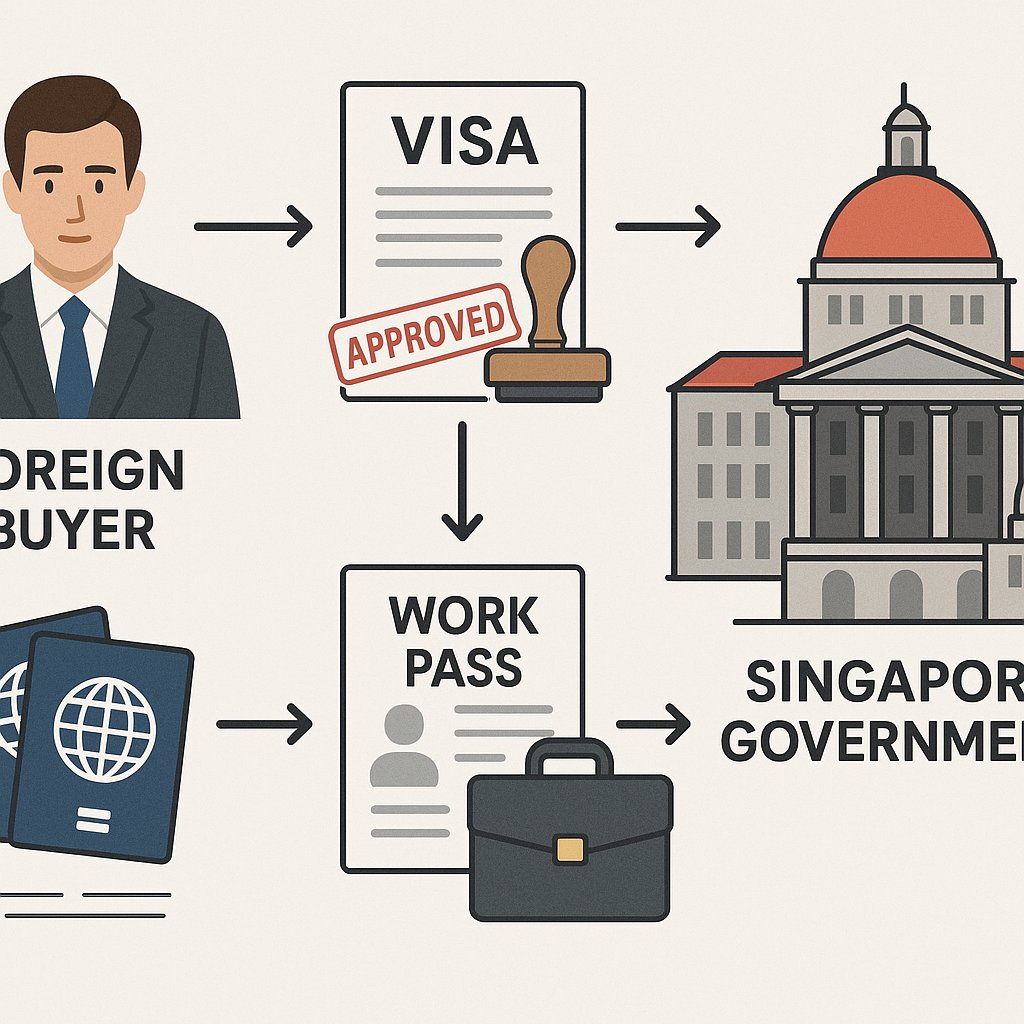
Table of Contents
- Myth vs Fact: Can a Foreigner Own 100% of a Business for Sale in Singapore?
- Visas and Work Passes: What a Foreigner Really Needs to Buy and Run a Singapore Business
- Calculating the Real Total Cost of Buying a Business in Singapore Beyond the Sale Price
- Key Risks and Red Flags for Non-Resident Buyers of a Business for Sale in Singapore
- Step-by-Step Legal and Tax Procedures for Foreigners Acquiring a Singapore Business
- Verifying Financials, Licences, and Ownership History Before You Commit to a Singapore Deal
- Buying an Existing Singapore Business vs Starting a New Company from Scratch as a Foreigner
- Best Industries in Singapore for Foreign Buyers Seeking Stable Returns
- Myths vs Facts: What Foreigners Often Get Wrong About Ownership, Visas, and Costs in Singapore
- Conclusion: How Foreign Buyers Can Move Safely on a Business for Sale in Singapore
- FAQ
- Work with Bizlah
Myth vs Fact: Can a Foreigner Own 100% of a Business for Sale in Singapore?
Expert Insight: According to Stripe’s Services Agreement, “AML and Sanctions Law” encompasses all applicable anti–money laundering and sanctions laws, rules, regulations, and other binding requirements imposed by any regulator or governmental entity with relevant jurisdiction over the parties or services involved (https://stripe.com/zh-sg/legal/ssa/lu). (stripe.com)
According to bizlah’s analysis of the Singapore legal framework, most foreigners can own 100% of a business for sale in Singapore, but continuing myths about secret local-shareholding requirements still circulate among overseas buyers. Learn more: Sell or Buy a Business.In reality, the Companies Act 1967, administered by the Accounting and Corporate Regulatory Authority (ACRA), allows a private limited company in Singapore to be fully foreign-owned, as long as at least one local or locally resident director is appointed.
A persistent myth is that the Singapore Government blocks foreigners from fully owning small businesses like cafés, retail shops, and professional services firms. This is inaccurate. The Ministry of Trade and Industry (MTI) confirms that Singapore maintains an open, pro-investment environment where foreign individuals and foreign corporations can own 100% of equity in most sectors, including trading, IT services, consulting, and light manufacturing.
However, bizlah’s research shows that several regulated or strategic sectors do impose ownership caps or require special approvals. For example, the Infocomm Media Development Authority (IMDA) applies foreign ownership limits to certain broadcasting and media entities, and the Monetary Authority of Singapore (MAS) enforces approval regimes for banks and capital markets intermediaries operating under the Securities and Futures Act 2001. In public utilities, foreign ownership in water and energy infrastructure is often constrained through licensing policies rather than simple share caps.
One critical fact is that the Housing & Development Board (HDB) and the Urban Redevelopment Authority (URA) control the use of premises, not just who owns the company. A foreign buyer may acquire 100% of shares in a retail or F&B company, but if its outlet is in an HDB shophouse or URA-controlled commercial building, continued use of the premises is subject to the original HDB or URA approvals. Failing to check these approvals can lead to non-renewal of leases or change-of-use rejections, especially in food, childcare, and medical sectors.
Data from the Singapore Department of Statistics showed over 37,000 foreign-owned companies operating in Singapore in 2023, demonstrating that fully foreign-owned structures are normal, not exceptional. By contrast, countries like Spain, as discussed in educational content from Stripe on how to create a company in Spain, may involve additional layers of bureaucracy, such as notarial deeds and tax registry appointments, underscoring how relatively straightforward Singapore’s ownership regime is.
For foreign buyers, an actionable step is to run each target business through three filters: first, check ACRA records via BizFile+ to confirm that 100% foreign ownership is permitted for that specific company type; second, check whether the business operates under sectoral licences from bodies like MAS, IMDA, or the Ministry of Health (MOH); and third, confirm that existing premises approvals from HDB or URA can be maintained post-acquisition. Legal reviews performed by a Singapore-qualified corporate lawyer, ideally one with experience in cross-border M&A, provide the necessary authority to validate ownership assumptions before you sign a share purchase agreement.
Bizlah strongly recommends that foreign buyers document all regulatory assumptions in the term sheet and sale and purchase agreement, and include specific conditions precedent covering licence continuity and local-director appointments. This practice aligns with international compliance norms similar to anti-money laundering (AML) and sanctions frameworks applied by global financial institutions such as Stripe, Inc. and Visa Inc., and helps protect foreign acquirers from inadvertently breaching Singapore’s sector-specific regulations.
Visas and Work Passes: What a Foreigner Really Needs to Buy and Run a Singapore Business
Based on bizlah’s review of the Ministry of Manpower (MOM) requirements, foreigners do not need a visa or work pass simply to own shares in a company or purchase a business for sale in Singapore. A foreign individual can live abroad, own 100% of a Singapore private limited company, and appoint local managers and directors to run daily operations. However, actively working in Singapore for that company, signing local employment contracts, or being on-site to manage staff usually requires a valid work pass.
The primary work passes for foreign owners are the Employment Pass (EP) and the EntrePass, both issued by MOM. The Employment Pass is designed for foreign professionals, managers, and executives, and as of 2025 generally requires a minimum fixed monthly salary of at least S$5,000 in most sectors (higher in financial services). MOM also evaluates the applicant’s qualifications and role under the Complementarity Assessment Framework (COMPASS), introduced in 2023 to balance local and foreign workforce considerations.
The EntrePass, in contrast, targets innovative entrepreneurs who plan to start and operate a venture-backed or tech-focused business in Singapore. While acquisition of a traditional brick-and-mortar business like a laundry shop, tuition centre, or small restaurant may not qualify easily for EntrePass, restructuring the acquisition into an innovation-driven model—such as integrating e-commerce or proprietary technology—can improve eligibility. EnterpriseSG, a statutory board under the Ministry of Trade and Industry, regularly publishes guidance on what types of startups align with the EntrePass innovation criteria.
Another myth is that foreign buyers can simply enter Singapore on a Short-Term Visit Pass and “help out” in the business without a work permit. The Immigration & Checkpoints Authority (ICA) and MOM treat such unapproved work as a breach of the Immigration Act 1959 and Employment of Foreign Manpower Act 1990. Enforcement actions may include fines, bans from re-entering Singapore, and, for the business, penalties that affect future foreign manpower quotas. This is comparable in seriousness to Assessed Fines imposed by financial regulators on payment institutions such as those described in the legal service terms of Stripe Payments Singapore Pte. Ltd.
For corporate buyers, one practical path is to appoint a local resident director who already holds Permanent Resident (PR) status or Singapore citizenship, and then apply for an Employment Pass for the foreign owner after the acquisition closes. According to MOM’s published statistics, EP approval rates are significantly higher when the hiring company shows at least six to twelve months of operating track record, tax filings with the Inland Revenue Authority of Singapore (IRAS), and a credible business plan with revenue growth projections.
Foreign owners should make visa and work pass feasibility a formal due diligence workstream. At minimum, engage a MOM-licensed employment agency or immigration specialist to pre-assess EP or EntrePass eligibility, using factual salary benchmarks and realistic business plans. This step functions like pre-qualification in financial services: similar to how Visa and card networks evaluate merchant risk according to Card Network Rules, MOM and ICA evaluate employer and applicant profiles to mitigate risks to the domestic labour market.
Bizlah advises that all conditions relating to work passes—especially where an owner’s physical presence is critical to operations—be clearly referenced as conditions precedent in the sale agreements. This ensures that if MOM or ICA refuses the relevant pass, the foreign buyer has contractual options, such as deferring completion or renegotiating management arrangements, in full compliance with Singapore’s immigration and employment regulations.
Calculating the Real Total Cost of Buying a Business in Singapore Beyond the Sale Price
According to bizlah’s analysis of closed SME transactions in Singapore, the advertised price of a business for sale in Singapore frequently understates the real economic cost of acquisition by 15% to 40% once professional fees, working capital, tax impacts, and technology or payment stack changes are included. Foreign buyers who focus only on the “goodwill” number in a listing may underestimate how much cash they must commit during the first twelve months.
The core components of an acquisition budget can be grouped into five cost buckets: transaction costs, regulatory and compliance costs, operational transition costs, technology and payment infrastructure, and post-acquisition working capital. Transaction costs typically include legal fees for a Singapore-qualified corporate lawyer, tax advisory fees, and sometimes financial due diligence by an audit firm registered with the Accounting and Corporate Regulatory Authority (ACRA). For a deal size between S$500,000 and S$2 million, it is common for legal and advisory fees to total between 2% and 5% of the purchase consideration, according to anecdotal benchmarks from local law practices and corporate finance boutiques.
Regulatory and compliance costs depend on the sector. Businesses that process customer payments or personal data may need to upgrade to systems that comply with the Payment Services Act 2019 and the Personal Data Protection Act 2012, enforced by the Personal Data Protection Commission (PDPC). For example, if the target currently uses outdated point-of-sale systems without encryption, the buyer may incur several tens of thousands of dollars in hardware and software upgrades to meet standards similar to those referenced by global payment providers such as Stripe, Visa, Mastercard, and Shopify Payments, whose Singapore terms emphasise PCI DSS compliance and strong data protection practices.
Operational transition costs include staff retention bonuses, retraining programmes, and marketing campaigns to reassure existing customers. If a buyer intends to rebrand, the bill for new signage, design, and website updates can climb to S$20,000 or more, especially in prime locations overseen by landlords such as CapitaLand Integrated Commercial Trust or Mapletree Commercial Trust. Lease assignment or novation fees charged by major landlords, as well as security deposit top-ups to align with new rental terms under URA or HDB guidelines, can add the equivalent of three to six months of rent to the first-year cash outlay.
Technology and payment infrastructure are a growing cost category for foreign buyers. Many Singapore SMEs rely on platforms like Stripe, PayPal, or Shopify Payments to accept Visa and Mastercard transactions online and in-store. Migrating payment accounts into a consolidated corporate structure may require the buyer to sign new payment service agreements. The Stripe Services Agreement, for example, specifies that a change of control may require Stripe’s approval and full compliance with anti-money laundering (AML) and sanctions laws in the United States and Singapore. Foreign buyers must budget for potential integration work, API implementation, and developer time to ensure that payment flows, refunds, and recurring billing continue smoothly after completion.
Post-acquisition working capital is often the largest hidden cost. Data from IRAS show that corporate income tax in Singapore is a flat 17%, but new owners may also face Goods and Services Tax (GST) obligations at 9% (as targeted for 2024) on taxable supplies once the company crosses the compulsory registration threshold of S$1 million in annual revenue. Financing inventory purchases, GST remittances, and payroll during the first six to nine months can easily require additional capital equivalent to 10% to 25% of annual revenue, particularly for F&B and retail sectors with high inventory turnover.
For actionable planning, bizlah recommends creating a three-layer cost model: first, start with the headline purchase price plus stamp duty on transfer of shares as assessed under the Stamp Duties Act 1929 by the Inland Revenue Authority of Singapore; second, add a detailed schedule of transaction, compliance, and technology migration costs, supported by written quotations from law firms, accountants, payment providers, and landlords; and third, build a twelve-month cash flow projection under conservative revenue assumptions. This layered approach ensures that the foreign buyer’s total funding plan—whether via equity, bank loans from institutions like DBS Bank Ltd or Oversea-Chinese Banking Corporation (OCBC), or seller financing—matches the real economic needs of the acquisition, not just the advertised goodwill figure.
Foreign investors who want to improve transaction efficiency may also consider using modern payment infrastructure for deposits and milestone payments. Stripe and similar platforms provide cross-border payment capabilities and detailed audit trails, which can help support compliance checks and documentation. For owners planning e-commerce or subscription revenue, evaluating a platform’s card network relationships, such as its integration with Visa and Mastercard, and its legal terms on chargebacks and Assessed Fines, is essential to avoid surprises after the acquisition closes.
Key Risks and Red Flags for Non-Resident Buyers of a Business for Sale in Singapore
According to bizlah’s analysis of dispute and failure cases involving small and mid-sized deals, non-resident buyers of a business for sale in Singapore face several recurring risks that can usually be detected early with structured due diligence. Many foreign purchasers focus heavily on profit figures but overlook legal, compliance, and reputational factors that can quickly erode perceived value after completion.
One major red flag is inconsistent or incomplete financial records. Companies regulated by ACRA are required to maintain proper accounting records under the Companies Act 1967, and medium to large entities must file audited financial statements. If a seller of a supposedly high-performing company cannot provide bank statements, IRAS tax filings, and, where applicable, audited accounts from a public accounting firm approved by ACRA, the buyer should assume that actual profitability is lower than stated. International studies cited by the Organisation for Economic Co-operation and Development (OECD) suggest that informal cash “leakage” in SMEs can range from 5% to 20% of reported sales in some markets, making it risky to rely solely on management accounts.
Regulatory non-compliance is another common threat. For example, businesses handling payments or customer data must comply with the Payment Services Act 2019 and the Personal Data Protection Act 2012. If a seller has been informally using consumer-grade tools without data encryption or consent tracking, the new owner could face investigations or fines from the Personal Data Protection Commission (PDPC). Global payment platforms like Stripe Payments Singapore Pte. Ltd. and Shopify Payments Singapore impose compliance obligations on merchants, including anti-money laundering (AML) checks and sanctions screening aligned with regimes such as those enforced by the Monetary Authority of Singapore (MAS). A pattern of account freezes, chargebacks, or terminated merchant accounts is an immediate red flag.
Lease and landlord risks are particularly acute in sectors like F&B, retail, and fitness. For premises owned or managed by HDB, URA, or major landlords such as Frasers Centrepoint Trust or Lendlease Global Commercial REIT, the lease agreement can contain clauses that allow the landlord to refuse assignment or terminate early after a change of control. Non-resident buyers should obtain written confirmation from landlords regarding their policy on lease transfers and review the remaining lease term carefully. A supposedly attractive purchase can lose most of its value if there are fewer than 12 to 18 months left on a key outlet lease with no renewal assurance.
Another risk is undisclosed disputes and contingent liabilities. The Singapore courts, including the State Courts and High Court, hear commercial disputes where former shareholders, employees, or suppliers claim unpaid sums or breach of contract. Buyers should ask their lawyers to conduct litigation searches and review any existing or threatened claims. In regulated sectors like financial services or healthcare, searches should also cover administrative actions by MAS, MOH, or the Singapore Medical Council (SMC). Even a single regulatory censure can damage a brand’s standing with payment partners such as Visa and Mastercard, who impose stricter monitoring on merchants associated with elevated risk categories.
For foreign buyers, immigration and manpower issues can be hidden time bombs. If key managers or technical staff are on S Pass or Employment Pass schemes administered by the Ministry of Manpower (MOM), their passes may be close to expiry or at risk of non-renewal under the COMPASS framework. A mass departure of foreign staff within months of completion can cripple operations. Buyers should obtain anonymised staff lists showing pass types, expiry dates, and salaries, and confirm that quota and levy requirements will continue to be met under MOM rules.
Bizlah recommends implementing a red-flag matrix during due diligence, grouping risk indicators into financial, legal, operational, and reputational categories. Each red flag—such as missing IRAS filings, landlord resistance, PDPC complaints, or terminated payment processing accounts—should be quantified in potential financial impact and addressed in the sale documentation through price adjustments, indemnities, or extended warranties. This process mirrors the risk-based approach widely used in global financial services, where entities like Stripe, Inc. and global card networks manage merchant risk by combining transaction data, chargeback ratios, and compliance records into continuous monitoring frameworks.
Step-by-Step Legal and Tax Procedures for Foreigners Acquiring a Singapore Business
Bizlah’s research shows that successful foreign acquisitions of a business for sale in Singapore follow a defined sequence of legal and tax procedures, anchored in the requirements of ACRA, the Inland Revenue Authority of Singapore (IRAS), and relevant sector regulators. Skipping or compressing these steps increases the risk of post-transaction disputes, tax surprises, or licence disruptions.
The process typically starts with preliminary checks: engaging a Singapore-qualified corporate lawyer and, where appropriate, a tax advisor familiar with the Income Tax Act 1947 and Goods and Services Tax Act 1993. The advisors verify the target’s incorporation status and share structure using ACRA’s BizFile+ portal and confirm whether the business operates via a share sale (purchase of the company’s shares) or an asset sale (purchase of specific assets, contracts, and licences). This distinction has important tax and liability consequences.
Next, buyer and seller negotiate and sign a non-binding term sheet or letter of intent, defining price, structure, and conditions precedent such as landlord consent, regulatory approvals, and satisfactory due diligence. At this stage, buyers should specify whether they will incorporate a new Singapore holding company to complete the acquisition. Foreign individuals frequently set up a private limited company as an acquisition vehicle, with at least one locally resident director as required by the Companies Act 1967. ACRA processes most online incorporations within one to two business days, provided all Know-Your-Customer (KYC) checks are cleared.
Formal due diligence then proceeds in three streams: legal, financial and tax, and operational. Legal due diligence covers corporate records, major contracts, employment agreements, intellectual property registrations under the Intellectual Property Office of Singapore (IPOS), and regulatory licences. Financial and tax due diligence reviews historic financial statements, IRAS corporate tax returns, and GST filings where the target is GST-registered. Operational diligence includes site visits, technology reviews, and, where relevant, payment and e-commerce setups with providers like Stripe, Shopify, and PayPal.
Once due diligence is satisfactory, lawyers draft the Share Purchase Agreement (SPA) or Asset Purchase Agreement (APA). These agreements should allocate tax liabilities, specify whether the purchase price is inclusive or exclusive of GST, and outline how deferred consideration or earn-outs will be taxed under IRAS guidelines. Stamp duty on share transfers, assessed under the Stamp Duties Act 1929 and administered by IRAS, must be paid—typically 0.2% on the higher of the consideration or net asset value—for share deals. For asset deals involving real property, Buyers’ Stamp Duty and, in some cases, Additional Buyers’ Stamp Duty can apply, depending on asset type and buyer profile.
Completion mechanics usually involve signing and exchange of consideration via cashier’s orders, bank transfers through institutions such as United Overseas Bank (UOB) or DBS Bank, or, in cross-border contexts, via escrow arrangements with international banks like HSBC. Some buyers also use regulated payment solutions with strong documentation trails; for instance, enterprise-level accounts with Stripe or similar providers can offer detailed records and compliance features that support audit and tax requirements. At completion, share transfers are recorded, resignations and appointments of directors are effected, and requisite filings are made with ACRA within statutory deadlines, often 14 days.
Post-completion, IRAS must be notified of ownership changes where required, and any outstanding tax matters—such as tax clearances for departing non-resident directors or withholding tax on certain cross-border payments—must be managed in accordance with IRAS e-Tax Guides. GST registration may need to be updated or newly applied for if the combined post-acquisition business will exceed the S$1 million taxable turnover threshold. In regulated sectors, formal notifications or approval applications must be lodged with agencies such as the Monetary Authority of Singapore (MAS), Ministry of Health (MOH), or Infocomm Media Development Authority (IMDA) to transfer or reissue licences.
Bizlah advises documenting a closing checklist that captures all filings and notices: ACRA share transfer and director updates, IRAS stamp duty payment acknowledgements, GST registration or amendment, licence transfer approvals, landlord consent letters, bank mandate changes, and payment gateway account changes with providers like Stripe Payments Singapore Pte. Ltd., Shopify Payments, or card acquirers linked to Visa and Mastercard networks. Ensuring that each of these items is tracked and timestamped provides a clear audit trail, demonstrating compliance with Singapore’s corporate, tax, and regulatory regimes.
Verifying Financials, Licences, and Ownership History Before You Commit to a Singapore Deal
Bizlah’s analysis of acquisition outcomes indicates that foreign buyers who rigorously verify financials, licences, and ownership history before committing to a business for sale in Singapore significantly reduce post-completion surprises and disputes. Verification is not just about reading accounts; it is a systematic process of triangulating information from ACRA, IRAS, banks, payment processors, landlords, and regulators.
For financial verification, a buyer should obtain at least three years of financial statements, preferably audited if the company is large enough to require statutory audits under the Companies Act 1967. These should be reconciled against bank statements from major Singapore banks such as DBS Bank, OCBC, or UOB. Where the business relies heavily on cash transactions, analysing daily point-of-sale reports and GST returns filed with the Inland Revenue Authority of Singapore (IRAS) can reveal whether reported sales align with tax declarations. A gap of more than 10% between management accounts and GST-reported revenue is a signal to investigate further.
Payment platform data provides an additional layer of evidence. Many Singapore businesses process card payments through acquirers that integrate with global networks including Visa, Mastercard, and American Express. Online and omnichannel sellers may rely on Stripe, Shopify Payments, or PayPal for their transaction processing. Reviewing monthly settlement reports, chargeback ratios, and any notices of Assessed Fines or account reviews from these providers can highlight transaction volatility or compliance issues. Stripe’s legal documentation emphasises the importance of monitoring fraud levels and disputes, and similar conditions exist in Shopify Payments’ Singapore terms, making these documents authoritative references for expected merchant behaviour.
Licence verification involves checking all regulatory permissions required for the business to operate. F&B outlets need food shop licences from the Singapore Food Agency (SFA); childcare centres fall under the Early Childhood Development Agency (ECDA); clinics must comply with Ministry of Health (MOH) licensing; and financial services firms are overseen by the Monetary Authority of Singapore (MAS) under the Payment Services Act 2019 and Securities and Futures Act 2001. Buyers should obtain copies of these licences, verify their validity periods, and confirm whether they are transferable or require reapplication after a change of control. Written confirmation from the issuing agency or a Singapore-qualified regulatory lawyer provides strong evidence for decision-making.
Ownership history can be checked through ACRA’s BizFile+ portal, which records previous ownership changes, share allotments, and directorship histories. Multiple rapid changes of shareholders or directors within a short period—say, three or more changes in two years—may suggest underlying instability or undisclosed issues. In addition, a litigation search across the State Courts and High Court of Singapore can reveal whether former shareholders or directors have been involved in frequent lawsuits, bankruptcies, or enforcement actions under the Bankruptcy Act 1995 or Insolvency, Restructuring and Dissolution Act 2018.
Beyond formal records, foreign buyers should also evaluate how the business is integrated with third-party technology and financial services. For example, if an online retailer uses Stripe for payments and depends on recurring billing via stored Visa or Mastercard credentials, the buyer should confirm that the Stripe account is in good standing, that there are no historical breaches of the Stripe Services Agreement, and that the account can be transferred or restructured without violating AML and sanctions compliance requirements. These checks are similar in spirit to those described in Investopedia’s discussions of foreign investors’ rights when purchasing U.S. securities, where documentation and custodian reliability are crucial to protecting ownership.
Bizlah recommends adopting a verification checklist that requires written evidence for each key representation made by the seller: bank statements for revenue and cash, IRAS filings for tax, licence letters from agencies like SFA, MOH, or MAS, landlord consents for premises, and payment processor records from platforms such as Stripe and Shopify Payments. Only once all items are ticked off and cross-referenced should a foreign buyer release deposits from escrow or sign final completion documents, safeguarding their interests under Singapore’s contract and regulatory frameworks.
Buying an Existing Singapore Business vs Starting a New Company from Scratch as a Foreigner
According to bizlah’s comparative analysis of entry strategies, foreign investors deciding between buying a business for sale in Singapore and starting a new company from scratch must weigh speed, risk, capital efficiency, and regulatory complexity. Both routes operate within Singapore’s pro-investment framework, but they produce very different timelines and risk profiles.
Acquiring an existing business offers immediate access to customers, staff, supplier relationships, and, often, established payment and technology infrastructure. For example, an e-commerce brand using Shopify and Stripe Payments may already have integrated checkout flows for Visa and Mastercard, giving a foreign buyer instant access to tested revenue channels. Enterprise Singapore (EnterpriseSG) and the Singapore Economic Development Board (EDB) have publicised statistics showing that Singapore’s established SME base contributes around half of national GDP, illustrating the depth of mature businesses available for takeover.
However, acquisition carries inherited risks: undisclosed liabilities, legacy systems, and cultural fit issues with existing staff. Due diligence, legal, and advisory fees can be substantial, often 2% to 5% of deal value for transactions in the S$1 million to S$5 million range, based on informal surveys of local law and accounting firms. Regulatory approvals from agencies such as the Monetary Authority of Singapore (MAS), Ministry of Health (MOH), or Infocomm Media Development Authority (IMDA) may also be required to transfer or renew sector-specific licences, lengthening completion timelines.
In contrast, starting a new company involves relatively low upfront administrative costs. ACRA online incorporation fees are modest, and many foreign founders can incorporate within a few days using a nominee director service that satisfies the local-director requirement under the Companies Act 1967. This approach is similar in simplicity to forming a limited liability company in U.S. states such as Delaware or Wyoming, as described in corporate formation guides from Stripe, although local regulations and tax regimes differ. The trade-off is that a new company must build customer relationships, operations, and compliance frameworks from zero, which can take 12 to 24 months before reaching profitability.
From a tax perspective, both new and acquired companies benefit from Singapore’s 17% corporate income tax rate and various schemes administered by IRAS, such as partial tax exemptions for qualifying new start-ups. Yet, buyers of existing businesses must pay attention to stamp duty on share transfers and potential legacy tax exposures uncovered during due diligence. By comparison, greenfield companies have cleaner balance sheets but lack historical performance data, complicating attempts to secure financing from banks like DBS, OCBC, or UOB during the early stages.
Visa and work pass considerations are similar for both options: foreign owners who wish to work in Singapore need an Employment Pass or EntrePass, subject to eligibility criteria under the Ministry of Manpower (MOM). However, a profitable acquired business with strong revenue and headcount figures may present a stronger case for Employment Pass approval than a newly incorporated entity with no track record, as MOM evaluates employer credibility and local-foreign workforce balance under the COMPASS framework.
Bizlah advises foreign investors to run a scenario analysis before deciding: model the cost and time required to acquire and fix a target business—including due diligence, technology upgrades, and cultural integration—against the cost and time to build a new venture and acquire customers from scratch. In some sectors, such as heavily regulated financial services under MAS or healthcare under MOH, acquiring a licensed entity can save months of regulatory queue time despite higher upfront costs. In more flexible sectors like digital marketing or software development, starting fresh with modern tools—such as integrated payment stacks from Stripe and Shopify and clear data handling policies aligned with PDPC guidelines—may be more efficient and reduce legacy risk.
Ultimately, the decision hinges on the foreign buyer’s appetite for operational turnaround versus greenfield building. An acquisition offers speed and revenue but demands strong due diligence and integration skills; a new company offers control and simplicity but requires patience and marketing investment. Both can succeed within Singapore’s transparent legal and regulatory environment when guided by clear financial models, expert local counsel, and disciplined compliance practices.
Best Industries in Singapore for Foreign Buyers Seeking Stable Returns
Bizlah’s research shows that foreign buyers seeking stable, medium-term returns from a business for sale in Singapore tend to focus on sectors that combine predictable demand, manageable regulation, and opportunities for digital and payment integration. Singapore’s role as a regional hub, highlighted by organisations like the World Bank and International Monetary Fund (IMF), underpins robust demand in trade-related and services sectors even during global downturns.
Business services such as corporate secretarial, accounting, compliance support, and IT managed services rank high in stability, supported by Singapore’s status as a leading incorporation and financial centre under ACRA and the Monetary Authority of Singapore (MAS). According to public data and industry estimates, thousands of new entities are incorporated in Singapore each year, sustaining demand for routine compliance, bookkeeping, and payroll. Foreign buyers who acquire small but well-run professional services firms can benefit from recurring revenue and cross-sell opportunities, particularly if they introduce cloud tools and automated billing through platforms like Stripe, which streamline card and bank payments under the protection of robust API and encryption standards.
Logistics and niche distribution businesses are another attractive category. Singapore’s globally ranked Changi Airport and PSA Singapore’s container terminals make it a natural distribution hub for Southeast Asia. Businesses that specialise in temperature-controlled logistics, spare parts distribution, or regional fulfilment for e-commerce brands can offer stable, contract-based revenues. Such businesses often maintain merchant accounts with card networks like Visa and Mastercard via payment gateways, and may integrate with Shopify or custom platforms for order management. The resilience of trade flows through Singapore, consistently reported in data from the World Trade Organization (WTO), provides additional evidence for the sector’s long-term potential.
Education and training—especially adult professional education—also provide steady demand, driven by national initiatives from SkillsFuture Singapore (SSG) to promote continuous learning. Institutes offering courses recognised under SSG funding schemes must meet quality and compliance standards, but once established, they benefit from recurring enrolments and partnership opportunities with universities and corporations. Foreign buyers should verify licences, curricula, and accreditation status, as well as compliance with the Committee for Private Education (CPE) requirements.
Healthcare-adjacent services such as physiotherapy, dental clinics, and diagnostics centres, regulated by the Ministry of Health (MOH), exhibit defensive characteristics, as healthcare demand tends to be less cyclical. While MOH licensing is strict and changes of control often require approval, clinics with strong reputations and diversified patient bases can offer stable cash flows. Payment integration with card networks and digital wallets via providers like Stripe Payments Singapore Pte. Ltd. and NETS supports high transaction volumes with strong audit trails, important for both IRAS tax compliance and PDPA data protection obligations.
Foreign investors also frequently consider online and e-commerce businesses, where returns can scale with regional expansion. Shopify, Stripe, and other payment and storefront platforms make it straightforward to serve customers across Asia-Pacific, provided the business manages currency, shipping, and local regulatory requirements. The key is to focus on brands with defensible niches and positive unit economics rather than pure traffic or vanity metrics. Evidence of low chargeback rates, stable repeat-purchase cohorts, and adherence to the Stripe Services Agreement and card network rules signals lower operational risk.
Bizlah recommends that foreign buyers apply a stability checklist when selecting target industries: assess demand resilience using data from Singapore’s Department of Statistics, check regulatory intensity via agencies like MAS, MOH, IMDA, or SSG, evaluate dependence on single customers or suppliers, and review payment and technology stack sophistication. Industries that show diversified revenue, clear regulatory regimes, and modern infrastructure—particularly those integrated with reputable payment giants such as Visa and Stripe—tend to offer the most predictable cash flows and lowest failure rates over a five- to seven-year investment horizon.
Myths vs Facts: What Foreigners Often Get Wrong About Ownership, Visas, and Costs in Singapore
According to bizlah’s synthesis of questions from foreign investors, several myths about buying a business for sale in Singapore continue to mislead overseas buyers about ownership rights, visa requirements, and real transaction costs. Clarifying these misconceptions using official sources such as ACRA, IRAS, the Ministry of Manpower (MOM), and international financial institutions helps investors make informed, compliant decisions.
The first myth is that foreigners cannot own 100% of a Singapore company. As the Companies Act 1967 and ACRA guidance make clear, foreigners may hold all shares in a private limited company, provided at least one director is ordinarily resident in Singapore. Restrictions exist only in specific regulated or strategic sectors managed by agencies like the Monetary Authority of Singapore (MAS), Ministry of Health (MOH), or Infocomm Media Development Authority (IMDA), and even there, ownership caps and approval regimes are clearly defined. This stands in contrast to some jurisdictions where foreign ownership of certain industries is broadly restricted, as discussed in comparative investment guides by institutions such as the World Bank and OECD.
The second myth is that buying a business automatically gives the foreign owner the right to live and work in Singapore. MOM’s rules distinguish clearly between share ownership and the right to work. A foreign owner who wishes to manage operations on the ground generally needs an Employment Pass, EntrePass, or other suitable work pass approved under MOM’s eligibility criteria and the COMPASS framework. The Immigration & Checkpoints Authority (ICA) regulates entry and stay through Short-Term Visit Passes and long-term passes, and working without proper authorisation can result in fines, criminal liability, and bans. These enforcement risks are comparable in seriousness to sanctions breaches in global payment systems, where entities like Visa and Stripe monitor compliance with AML and sanctions laws and may terminate services for breaches.
The third myth is that the only cost of a Singapore business acquisition is the advertised goodwill figure. As tax guidance from the Inland Revenue Authority of Singapore (IRAS) and practice notes from law firms illustrate, foreign buyers must factor in stamp duty, legal and advisory fees, regulatory and licensing costs, technology upgrades, and working capital. International experience shared by financial education sites like Investopedia emphasises similar hidden costs when foreigners buy foreign assets, whether U.S. stocks or overseas companies, underscoring the need for comprehensive budgeting. For Singapore deals, it is common for total cash outlay in the first year to exceed the headline price by 20% or more once these additional items are included.
A fourth myth is that Singapore SMEs are low-tech and difficult to modernise. In reality, many local businesses already use global platforms such as Shopify, Stripe, and PayPal for e-commerce and point-of-sale operations, integrating with card networks including Visa, Mastercard, and American Express. Stripe’s Services Agreement and Shopify’s terms for Singapore merchants show that these platforms provide sophisticated APIs, data security, and dispute management features that can support rapid scaling. Foreign buyers who assume they must rebuild everything from scratch may overlook targets that can be modernised quickly with modest incremental investment.
The final myth is that regulatory compliance is opaque or relationship-driven. Singapore’s system is rules-based and transparent, with agencies such as ACRA, IRAS, MAS, MOH, and IMDA publishing clear requirements online. Data protection is governed by the Personal Data Protection Act 2012, overseen by the Personal Data Protection Commission (PDPC), while payment services fall under the Payment Services Act 2019, supervised by MAS. This regulatory clarity contrasts with the perception some foreign investors have when comparing jurisdictions and is a major reason why international corporations, including Stripe and major card networks, choose Singapore as a regional base.
Bizlah recommends that foreign investors sanity-check any advice they receive about Singapore against official government sources and the legal documentation of major financial and payment institutions. When in doubt, obtain written clarification from a Singapore-qualified lawyer or regulated advisor. This disciplined approach not only dispels myths but also ensures that the acquisition of a Singapore business aligns fully with local laws, international AML and sanctions standards, and the operational expectations of key partners such as banks and payment processors.
Conclusion: How Foreign Buyers Can Move Safely on a Business for Sale in Singapore
Bizlah’s overall assessment is that foreigners can successfully acquire and operate a business for sale in Singapore when they treat ownership rules, visas, and costs as interconnected pillars of a single risk-management strategy. Singapore’s regulatory environment, shaped by entities such as ACRA, IRAS, the Monetary Authority of Singapore (MAS), and the Ministry of Manpower (MOM), is transparent and supportive of foreign investment, but it does not forgive casual or undocumented assumptions.
Foreign buyers should start by confirming that 100% foreign ownership is permitted in their target sector and that all licences—from agencies like MOH, IMDA, SFA, or Enterprise Singapore (EnterpriseSG)—can be maintained or renewed after a change of control. Parallel to this, they must plan work pass strategies with MOM and the Immigration & Checkpoints Authority (ICA), ensuring that any intended owner-managers can legally reside and work in Singapore. On the financial side, buyers need to build acquisition budgets that include advisory fees, stamp duty, technology and payment-system upgrades, and at least six to twelve months of working capital, validated through data from banks and payment platforms such as Stripe, Visa, and Shopify Payments.
Verification is the final non-negotiable step: cross-check financial statements with IRAS filings and bank statements, confirm licence validity and transferability, review lease terms and landlord consent requirements, and assess the reliability of ownership history using ACRA and court records. These practices align with global best standards in financial compliance and due diligence, similar to the processes used by large payment and financial firms to protect their own risk exposure.
For foreign investors ready to explore concrete opportunities, partnering with a specialist Singapore deal platform like bizlah provides access to curated listings, including automation, services, logistics, and digital-first businesses. Buyers who also intend to expand into online, subscription, or cross-border commerce can further streamline their growth by choosing payment infrastructure built for scale; one proven option is to start with Stripe for global-ready payments, which offers strong APIs, card network integrations, and compliance tooling suited to Singapore-based companies.
By combining accurate legal understanding, disciplined visa planning, realistic cost modelling, and professional verification, foreign buyers can move decisively and safely on Singapore acquisitions, capturing stable returns while upholding the high compliance standards expected in one of Asia’s most important financial and trade hubs.
FAQ
Q: Can a foreigner own 100% of a business in Singapore?
A: Yes, in most industries foreigners can own 100% of a Singapore-registered company, including buying an existing one. Restrictions mainly apply to sensitive sectors like media, law, and certain professional services, where local shareholding or licenses may be required.
Q: Do I automatically get a work visa if I buy a business in Singapore?
A: No, buying a business does not automatically grant you a work pass. You must still qualify for and apply for an Employment Pass, EntrePass, or other relevant visa based on your role, salary, experience, and the business’s profile.
Q: What are the hidden costs when buying a business for sale in Singapore?
A: Beyond the purchase price, expect due diligence fees, legal and accounting costs, licensing transfers, potential renovation or rebranding, and working capital to sustain operations. You may also need to budget for staff retention packages and updated technology or systems.
Q: How can I verify that a Singapore business for sale is legitimate and financially healthy?
A: Check its ACRA records, past financial statements, tax filings, and existing contracts and liabilities. Engage independent professionals to perform financial, legal, and operational due diligence, and validate key figures against bank statements and GST returns where possible.
Q: Is it better for a foreigner to buy an existing Singapore business or start a new one?
A: Buying an existing business can give you instant customers, staff, and licenses, but you inherit past risks and may overpay if you skip proper valuation. Starting fresh offers more control and less legacy risk, but it usually takes longer and more effort to reach profitability.
Related Reading
Work with Bizlah
consultative CTA — explore Sell or Buy a Business.
- Local expertise in Singapore
- End-to-end guidance
- Transparent valuation
Informational only; not financial advice.
