
Automation-Centric Business Opportunities in Singapore: From Factory Floors to Fully Online Plays

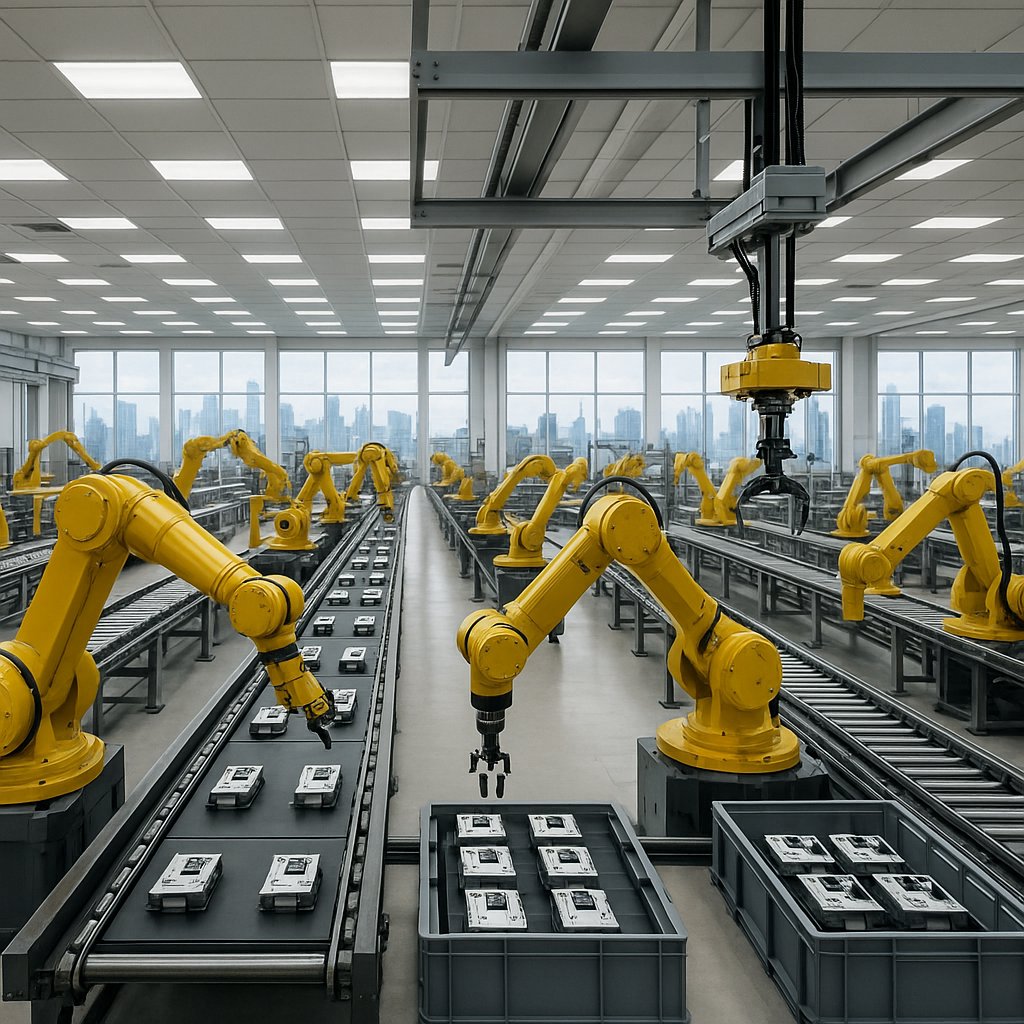
Table of Contents
- Overview: Why Automation-Centric Plays Suit Singapore Now
- Smart Manufacturing & Industrial Automation: From Policy Push to Deal Flow
- Hybrid Models: Automating Service and Retail Without Losing Human Touch
- Fully Online Automation Plays: Building Systems-First Digital Businesses
- Entry Paths: Buy, Build, or Bolt Automation Onto an Existing Business
- Conclusion: Positioning for Singapore’s Automation-Driven Next Phase
- FAQ
- Work with Bizlah
Overview: Why Automation-Centric Plays Suit Singapore Now
Expert Insight:
According to PwC Singapore, the Government will progressively lower the S Pass Sub-Dependency Ratio Ceiling for the manufacturing sector from 20% to 18% on 1 January 2022 and to 15% on 1 January 2023, while keeping Foreign Worker Levy rates unchanged, to push firms toward hiring and upskilling more local workers ([source](https://www.pwc.com/sg/en/publications/singapore-budget/2021/commentary/transforming-to-seize-opportunities.html)). (
www.pwc.com)Singapore is doubling down on productivity, smart manufacturing, and digital trade. Learn more: Sell or Buy a Business.Government policy is nudging companies away from labour-heavy models through tighter foreign worker quotas, while simultaneously funding technology adoption and skills upgrading. For entrepreneurs and investors, this creates a window to build or acquire automation-centric businesses that scale with systems rather than headcount.
From Industry 4.0 factories in Jurong and Tuas to fully online, AI-enabled micro-brands selling worldwide, the opportunity set is wide. Automation is no longer just robotics on the factory floor; it now covers cloud software, workflow automation, AI agents, and data-driven decision engines embedded across operations.
Instead of competing purely on cost, Singapore businesses can position themselves as high-value, high-reliability partners powered by smart systems. This article maps out where those opportunities lie across:
- Smart manufacturing and industrial automation
- Hybrid offline–online business models that automate routine workflows
- Fully online, automation-first businesses
- Entry paths via the growing market for a business for sale in Singapore
Smart Manufacturing & Industrial Automation: From Policy Push to Deal Flow
Singapore’s manufacturing sector is under structural pressure to automate. The reduction of S Pass Sub-Dependency Ratio Ceilings (DRCs) for manufacturers and a 10-year plan to grow the sector by 50% signal a clear direction: more output, less reliance on low- to mid-skilled foreign labour, and greater use of advanced technology.
Global surveys of manufacturers show that companies are investing heavily in smart manufacturing—industrial IoT, robotics, AI analytics, and integrated IT/OT platforms. Yet they also report persistent skills shortages in areas such as data science, application development, and cybersecurity. As a result, many manufacturers either:
- Upskill their existing workforce and build internal capabilities, or
- Outsource critical automation, data, and cybersecurity roles to specialist providers.
This dynamic creates several automation-centric business opportunities in Singapore:
- Automation system integrators and consultants: Firms that design, integrate, and maintain robotics, sensors, MES, and ERP systems for SMEs that cannot afford in-house teams.
- Data and AI analytics studios for factories: Specialists who build dashboards, predictive maintenance models, and optimisation algorithms on top of clients’ production data.
- Managed industrial cybersecurity and OT monitoring: Service providers offering security operations centres (SOC) and incident response tailored to industrial environments.
- Training and capability transfer providers: Companies that run practical Industry 4.0 training, leveraging government support schemes to help factories transition staff into higher-skilled, tech-centric roles.
For buyers and investors, these are not just greenfield ideas. They are increasingly visible as part of the deal pipeline when searching for an established automation or engineering business for sale in Singapore, especially in precision engineering, industrial IT, and maintenance services. Acquiring an existing player with client contracts and technical teams can be a faster way to participate in the sector’s growth than building from scratch.
Hybrid Models: Automating Service and Retail Without Losing Human Touch
Between heavy industry and fully online ventures lies a large middle ground: physical businesses that use automation to streamline operations while still relying on human expertise and in-person experiences. Singapore’s strong logistics, broadband, and payments infrastructure make these hybrid models particularly attractive.
Examples of automation-centric hybrid plays include:
- Tech-enabled logistics and warehousing SMEs: Businesses that combine automated inventory management, barcode/RFID tracking, and route optimisation with on-the-ground staff. Automation handles planning and orchestration; employees handle exceptions and customer relationships.
- Clinics and professional services with digital backbones: Medical, legal, and consulting firms that automate appointment scheduling, intake forms, invoicing, and follow-ups. Chatbots and knowledge bases answer routine questions, while professionals focus on high-value advisory work.
- Retail concepts with self-service and smart replenishment: Stores that use kiosks, QR ordering, and integrated POS–inventory systems to reduce front-line staffing needs and minimise stock-outs. In some cases, unstaffed or minimally staffed outlets are feasible using CCTV and digital access control.
- Training centres and academies with automated delivery: Blended learning providers that use learning management systems and automated assessments to scale beyond physical classrooms, supported by trainers who focus on mentoring and complex queries.
These models are aligned with Singapore’s broader strategy: raise productivity, ease manpower constraints, and push businesses up the value chain. For owners, automation in these settings often starts with practical steps—standardising processes, deploying software to handle routine tasks, and connecting data across locations.
For buyers, the key is to target hybrid businesses where:
- Core processes are already partially automated but can be further optimised, and
- Customer demand is stable enough that additional automation will unlock higher margins rather than simply reduce costs.
In other words, you want to step into a business that has already proven market demand and begun its digital journey, then use automation as a lever for scale, not as a band-aid for weak fundamentals.
Fully Online Automation Plays: Building Systems-First Digital Businesses
Automation-native, fully online businesses are no longer experimental. With off-the-shelf software and AI tools, one or two founders can now run operations that previously needed entire teams. The key is to design the business model around automation from day one.
Automation-centric online opportunities relevant to Singapore-based owners include:
- AI-assisted e-commerce brands: Stores that use automation for product research, inventory sync, order routing, and 24/7 customer support. AI helps generate product descriptions, ads, and email flows, while fulfilment is largely handled by third-party logistics partners.
- Subscription and digital product businesses: Online courses, templates, SaaS micro-tools, or niche membership sites where onboarding, billing, and content delivery are automated. Once the system is set up, the marginal cost of serving additional customers is very low.
- Lead-generation and performance marketing engines: Sites that use automation to attract, nurture, and qualify leads via content, SEO, and ad funnels—then sell those leads to service providers or convert them into recurring subscriptions.
- Global micro-agencies powered by AI: Lean teams using automation tools for campaign management, reporting, and basic content production while focusing human effort on strategy and relationship-building.
Many of these models are already represented in the marketplace when you look for a digital or technology-focused business for sale in Singapore. Buyers can acquire:
- Online stores with robust traffic and automated fulfilment
- Content sites or micro-SaaS assets with recurring revenue and stable subscriber bases
- Lean agencies that rely on automation for delivery and reporting
Because these businesses are highly systems-dependent, due diligence must go beyond financials. You need to examine the actual automations: email sequences, chatbots, API integrations, analytics setups, and vendor dependencies. The value lies not just in the brand and customer base, but in how elegantly the workflows run with minimal manual oversight.
Entry Paths: Buy, Build, or Bolt Automation Onto an Existing Business
For entrepreneurs and investors in Singapore, there are three main routes into automation-centric business plays: buying an existing operation, building from scratch, or bolting automation onto a current business.
1. Buying automation-ready businesses
If you want traction quickly, acquiring a proven, systems-driven operation can be attractive. When evaluating a business for sale in Singaporethrough brokers or independent listings, focus on:
- Automation depth: How much of sales, fulfilment, and support is already automated? Are there documented workflows and system diagrams?
- Technology stack quality: Are tools modern, well-integrated, and replaceable if vendors change pricing or terms?
- Talent and outsourcing mix: Which capabilities are in-house versus outsourced, especially for IT, automation, and cybersecurity? Is knowledge captured or locked in key individuals?
- Scalability: Can revenue double without a proportional increase in staff costs or complexity?
2. Building automation-first ventures
Starting from zero gives you design freedom. You can architect your business model around automation from day one, using cloud software and AI to minimise fixed overheads. This path suits founders who have:
- Deep domain knowledge and a clear niche (e.g., specialised manufacturing analytics, regulatory content, or technical B2B services)
- Comfort with technology and experimentation
- Patience to validate and iterate instead of buying an existing customer base
3. Bolting automation onto what you already own
If you already run a traditional business, you can convert it into a more automation-centric operation by:
- Standardising processes and documenting key workflows
- Introducing automation for tasks like scheduling, invoicing, and reporting
- Using analytics and AI to improve pricing, forecasting, and resource allocation
- Exploring managed services or outsourcing for cybersecurity, IT, and data analytics where in-house capabilities are limited
This approach can materially enhance valuation if you eventually decide to sell. Buyers increasingly pay a premium for companies where revenue is backed by repeatable systems, not dependent on the owner’s daily firefighting.
Whether you are looking at factory-adjacent opportunities, hybrid service models, or fully online ventures, it is worth scanning the current listings of automation-leaning business for sale in Singapore. Pairing a proven customer base with a clear automation roadmap can be a powerful way to capture value in the next phase of Singapore’s growth.
Conclusion: Positioning for Singapore’s Automation-Driven Next Phase
Singapore’s policy direction, global manufacturing trends, and advances in AI and cloud software all point to the same conclusion: the most resilient and scalable businesses will be those designed around automation. On the factory floor, this means smarter, data-rich production and services. In hybrid sectors, it means automating the routine while humans focus on judgment and relationships. Online, it means building ventures where code and workflows do most of the heavy lifting.
For owners, founders, and investors, the question is not whether automation will reshape the opportunity set—it already has. The question is how you will participate: by building new, automation-first ventures; by upgrading what you already own; or by acquiring an automation-ready business for sale in Singaporeand scaling it further.
Those who treat automation as a core design principle, rather than an afterthought, will be best positioned to tap the next wave of growth within Singapore’s evolving, high-productivity economy.
FAQ
Q:
What types of automation-focused businesses are most promising in Singapore right now?
A:High-potential areas include smart manufacturing (robotics, IoT-enabled production), logistics and warehousing automation, AI-driven marketing and customer service tools, and fully online process-automation SaaS. Singapore’s strong infrastructure, pro-tech policies, and regional connectivity make these models scalable across Southeast Asia.
Q:
How can traditional factories in Singapore transition into smart manufacturing businesses?
A:Owners can start by digitising key processes, adding sensors to critical equipment, and deploying simple workflow automation first, then layering advanced robotics and analytics. Partnering with local system integrators and tapping government grants can reduce upfront risk while building a repeatable, automation-centric business model.
Q:
What are examples of hybrid service models that use automation but still need people?
A:Examples include automated self-storage with remote monitoring, cloud kitchens using kitchen automation plus online ordering, and agencies that deliver services via internal AI tools and process automation. These models use technology to handle routine work while staff focus on sales, strategy, and complex customer needs.
Q:
How can investors use the business-for-sale market to enter automation opportunities faster?
A:Investors can acquire SMEs that already have stable revenue and then inject automation to improve margins and scalability. By buying existing customer bases and operations, they skip the hardest early-stage work and focus on transforming the business into a more tech-enabled, higher-multiple asset.
Q:
What should entrepreneurs look for when evaluating a business to automate in Singapore?
A:Look for repetitive processes, labour-intensive workflows, and strong recurring demand that software, robots, or AI can streamline. Healthy gross margins, clean financials, and owners open to transition support make it easier to implement automation and quickly realise value.
Related Reading
Work with Bizlah
consultative CTA — explore Sell or Buy a Business.
- Local expertise in Singapore
- End-to-end guidance
- Transparent valuation
Informational only; not financial advice.