
Automation Advantage: What Serious Buyers Should Check Before Acquiring a Business for Sale in Singapore
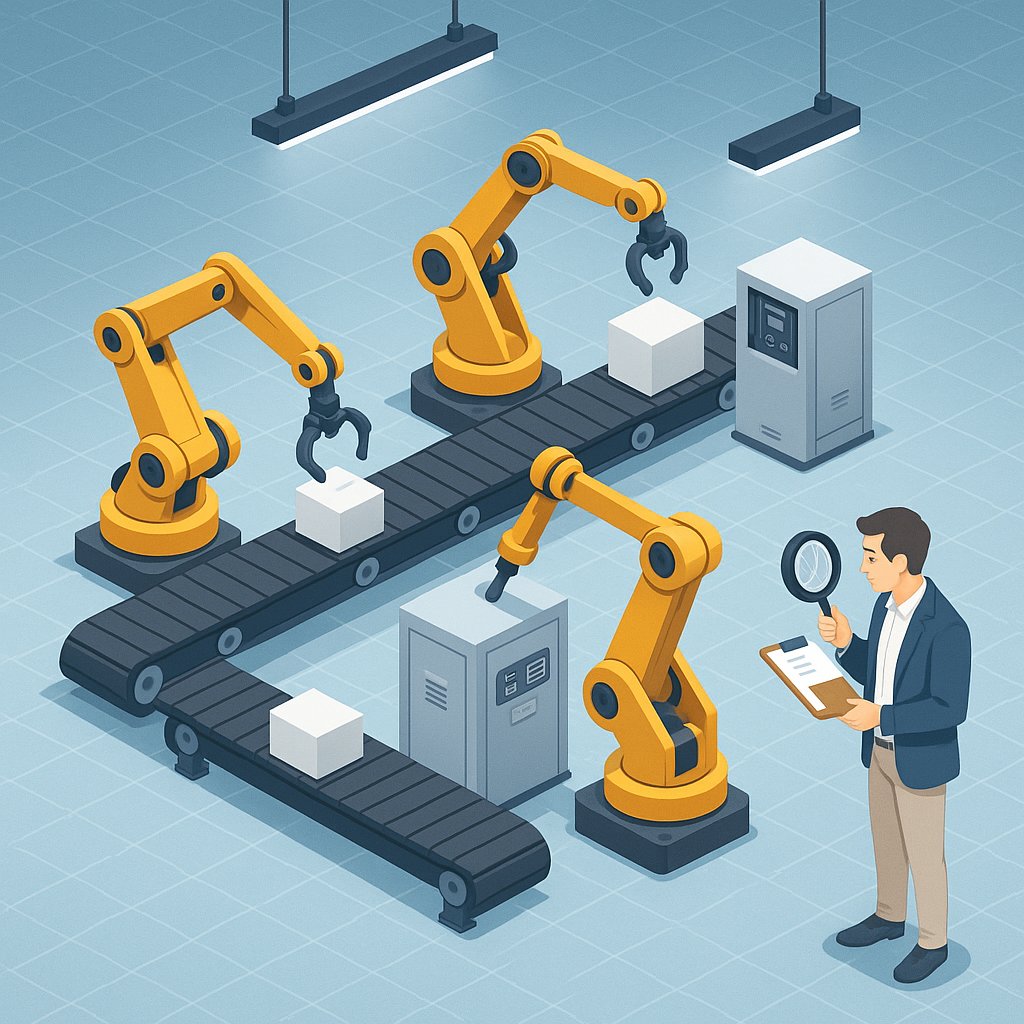
Table of Contents
- Overview: Automation as a Due-Diligence Lens, Not Just a Cost-Saving Tool
- Industrial and Manufacturing Deals: Reading Automation Depth Beyond the Machinery List
- Service and Back-Office Automation: Where Invisible Systems Drive Visible Value
- Consumer, Retail, and Vending: Self-Service Automation as a Business Model
- Building a Deal Thesis Around Automation for Any Business for Sale in Singapore
- FAQ
- Work with Bizlah
Overview: Automation as a Due-Diligence Lens, Not Just a Cost-Saving Tool
Expert Insight: According to industrial research from 6Wresearch, Singapore’s industrial automation market is steadily expanding as manufacturers adopt robotics, PLCs, and SCADA to raise productivity, lower labor costs, and improve product quality in line with Industry 4.0 principles (https://www.6wresearch.com/industry-report/singapore-industrial-automation-market). (bizlah.com)
Automation has moved from optional upgrade to core value driver in Singapore’s business landscape. Learn more: Sell or Buy a Business.Whether you are eyeing an industrial workshop, a service SME, or a self-service retail concept, the way a company uses automation now directly shapes risk, valuation, and scalability.
If you are considering a business for sale in Singapore, you should treat automation as a dedicated workstream in your deal process, not simply a post-acquisition efficiency project. It affects:
- Revenue resilience: automated operations and data-driven workflows tend to keep running smoothly even with labour shortages or rising wages.
- Margin expansion: smart use of robotics, software, and low-code workflows can cut repetitive labour and error rates.
- Exit readiness: systemised, automated businesses typically fetch better multiples from future buyers and investors.
This article focuses on what to examine in a target’s automation footprint, how to link that assessment to the price you are willing to pay, and how to spot under-automated assets that could become your next growth platform.
Industrial and Manufacturing Deals: Reading Automation Depth Beyond the Machinery List
Industrial and advanced manufacturing remain at the core of Singapore’s automation story. Listings for factories and production businesses often highlight machines, not the underlying automation strategy. As a buyer, you need to separate conventional mechanisation from true, data-driven automation.
When you review industrial or manufacturing businesses for sale, look beyond the equipment inventory and focus on how integrated and intelligent the systems really are.
Key questions to ask during evaluation include:
- Control and monitoring stack: Is production controlled through PLCs and SCADA/MES systems, or mostly through manual switches and paper instructions? Are OEE (overall equipment effectiveness), downtime, and scrap tracked automatically?
- Robotics and automation assets: Where are robots or automated handling used today, and what is still done by hand? Are there collaborative robots (cobots) that can be reprogrammed for new SKUs?
- Integration with quality and maintenance: Are sensors feeding live data into predictive maintenance schedules and quality checks, or does the team rely on periodic manual inspections?
- Data usability: Is production data accessible in dashboards or exportable formats that you can analyse during due diligence?
These details influence what you should pay. A plant with embedded robotics, data capture, and integrated quality control justifies a higher multiple if the automation is current and well-maintained. Conversely, semi-automated shops running dated equipment may look less impressive today but can offer strong upside if you plan a phased upgrade.
For owners or brokers listing a business for sale in the industrial segment, preparing a transparent automation inventory (hardware, software, and maintenance contracts) can also attract more sophisticated buyers and shorten negotiation cycles.
Service and Back-Office Automation: Where Invisible Systems Drive Visible Value
In many Singapore SMEs, the most powerful automation lives behind the scenes in finance, sales, and operations support. It is rarely highlighted in listings, but it should be a major factor when you assess any business for sale in Singapore across sectors such as professional services, distribution, or multi-outlet retail.
Modern back-office automation goes far beyond simple accounting software. It may include:
- Robotic process automation (RPA) running repetitive tasks in finance, HR, and customer service, as outlined in various RPA product discussions.
- Sales engagement and marketing automation tools that structure lead follow-up and nurture, similar to trends described in sales and marketing automation market analyses.
- Order-to-cash (O2C) workflows that automate quotes, invoicing, collections, and cash application.
- Cloud-based HR and scheduling systems that reduce manual rostering and payroll errors.
During due diligence, you should map how the business actually works from customer inquiry to cash in the bank:
- Process walkthrough: Sit with operations and finance teams and follow a few real transactions from order to payment. Note every spreadsheet, manual approval, and handover.
- System inventory: Document the CRM, billing, accounting, RPA, and workflow tools in use. Ask about integration (APIs, file uploads) rather than just brand names.
- Error and rework rates: Request data on invoice disputes, credit notes, or late payroll issues to gauge how effective existing automation really is.
Businesses that already use integrated, API-ready systems can usually scale new locations or product lines with minimal back-office hiring. Companies relying heavily on manual work may look cheaper upfront, but you must factor in both the cost and disruption of implementing the missing automation.
If you are comparing several listings on platforms like BusinessForSale.sg, use this back-office lens as a differentiator. Two businesses with similar revenue can have very different risk and margin profiles depending on how well their internal workflows are automated.
Consumer, Retail, and Vending: Self-Service Automation as a Business Model
In consumer-facing sectors, automation is not just an efficiency tool; it is often the core of the business model. Self-checkout kiosks, QR ordering, and unattended vending are all examples where technology replaces or reduces frontline labour, making unit economics more predictable and location-driven.
Vending machine operations in particular have gained attention as a relatively low-touch way to enter entrepreneurship. Guides such as the vending machine business start guide in Singapore highlight how route planning, product selection, and cashless payment systems interact. When you buy rather than build, you must also examine:
- Hardware and connectivity: Are machines equipped with telemetry and remote monitoring for stock levels, temperature, and machine health, or is restocking done by visual checks only?
- Payment automation: Do devices support the major local wallets and cards? Software-driven payment upgrades can be a quick lever for revenue growth.
- Inventory and route optimisation: Is replenishment supported by data-driven schedules, or are drivers following static routes regardless of actual demand?
- Franchise or platform support: In some vending and self-service models, a franchisor or platform provider offers centralised software and analytics that effectively act as your automation layer.
For broader retail or F&B concepts, look at:
- Online-to-offline integration: click-and-collect, QR menus, or kiosk ordering that reduces queueing and front-of-house staffing.
- Customer data capture: loyalty apps and CRM systems that automate repeat marketing rather than relying on ad-hoc promotions.
- Labour scheduling tools: systems that adapt staffing to footfall patterns instead of fixed rosters.
When you see a consumer-facing business for sale in Singapore that appears heavily dependent on manual counter staff, ask yourself how many of those touchpoints could be partially automated without hurting the brand. Your automation roadmap may be the main justification for paying a premium over asset value.
Building a Deal Thesis Around Automation for Any Business for Sale in Singapore
To turn automation from a buzzword into a practical advantage, you need to embed it directly into your deal thesis. That means linking your automation assumptions to how you screen targets, structure offers, and plan the first 12–24 months after closing.
Use a simple three-part framework when reviewing any business for sale in Singapore:
- Baseline: Where is the automation today?
Document current tools and processes across operations, sales, and back-office. Identify which workflows are fully manual, partially automated, or already integrated. - Roadmap: What can realistically be automated next?
Sketch 3–5 priority initiatives such as implementing RPA for invoice processing, adding sensors to key machines, or deploying a sales engagement platform. For each, note expected one-time costs, monthly fees, and impact on time, errors, or capacity. - Valuation link: How does the roadmap support your price?
Translate your roadmap into financial scenarios. Conservative assumptions are better: for example, assume a modest productivity gain or a gradual reduction in working capital needs rather than best-case outcomes.
In negotiations, this framework supports:
- Price discipline: You can justify why you will not pay top-tier multiples if the target is under-automated and the upgrade path is costly.
- Performance-based structures: Earn-outs or vendor financing tied to revenue or margin milestones can align automation benefits with what you ultimately pay.
- Financing narratives: Lenders and investors often respond well to clear, data-backed automation plans that show how cash flows will strengthen post-acquisition.
Rather than attempting to analyse dozens of listings by yourself, you can work with specialised advisors who understand both automation and the local M&A market. Bizlah helps serious buyers filter and evaluate opportunities, including automation depth and upgrade potential, so you can secure a better-fit business for sale in Singapore and move into ownership with a clear implementation plan.
Whether you are targeting an industrial plant, a lean service firm, or a self-service retail concept, baking automation thinking into your deal thesis is the fastest way to turn today’s trends into tomorrow’s equity value.
FAQ
Q: Why does automation matter so much when valuing a business for sale in Singapore?
A: Automation directly affects labor costs, error rates, and throughput, all of which influence cash flow and valuation multiples. In Singapore’s high-cost environment, even modest automation can significantly improve margins and make a business more resilient to wage inflation.
Q: How can I quickly assess the current level of automation in a target business?
A: Map the core workflows (sales, operations, inventory, finance) and list which steps are software- or machine-driven versus manual. Ask for system diagrams, software lists, integration charts, and actual process screenshots or videos to confirm the owner’s claims.
Q: How should I factor future automation projects into the purchase price?
A: Treat planned automation as an investment case: estimate upfront capex, implementation time, efficiency gains, and risk, then build a separate ROI model. Use this to negotiate either a lower base price or an earn-out structure tied to realized cost savings or revenue uplift.
Q: What deal structures work well when automation benefits are uncertain?
A: Earn-outs and performance-based price adjustments align price with actual post-acquisition results. You can also use vendor financing or holdbacks that are released only if automation milestones, such as specific productivity or margin targets, are met.
Q: Are there industry-specific automation red flags I should watch for in Singapore?
A: In manufacturing, look for obsolete machinery, unsupported control systems, or reliance on a single overseas vendor for critical parts. In services, retail, and vending, outdated POS, weak data integration, and manual inventory or cash reconciliation are warning signs of hidden inefficiencies.
Related Reading
Work with Bizlah
consultative CTA — explore Sell or Buy a Business.
- Local expertise in Singapore
- End-to-end guidance
- Transparent valuation
Informational only; not financial advice.