
Automation-Led Growth Strategies When You Buy a Business for Sale in Singapore
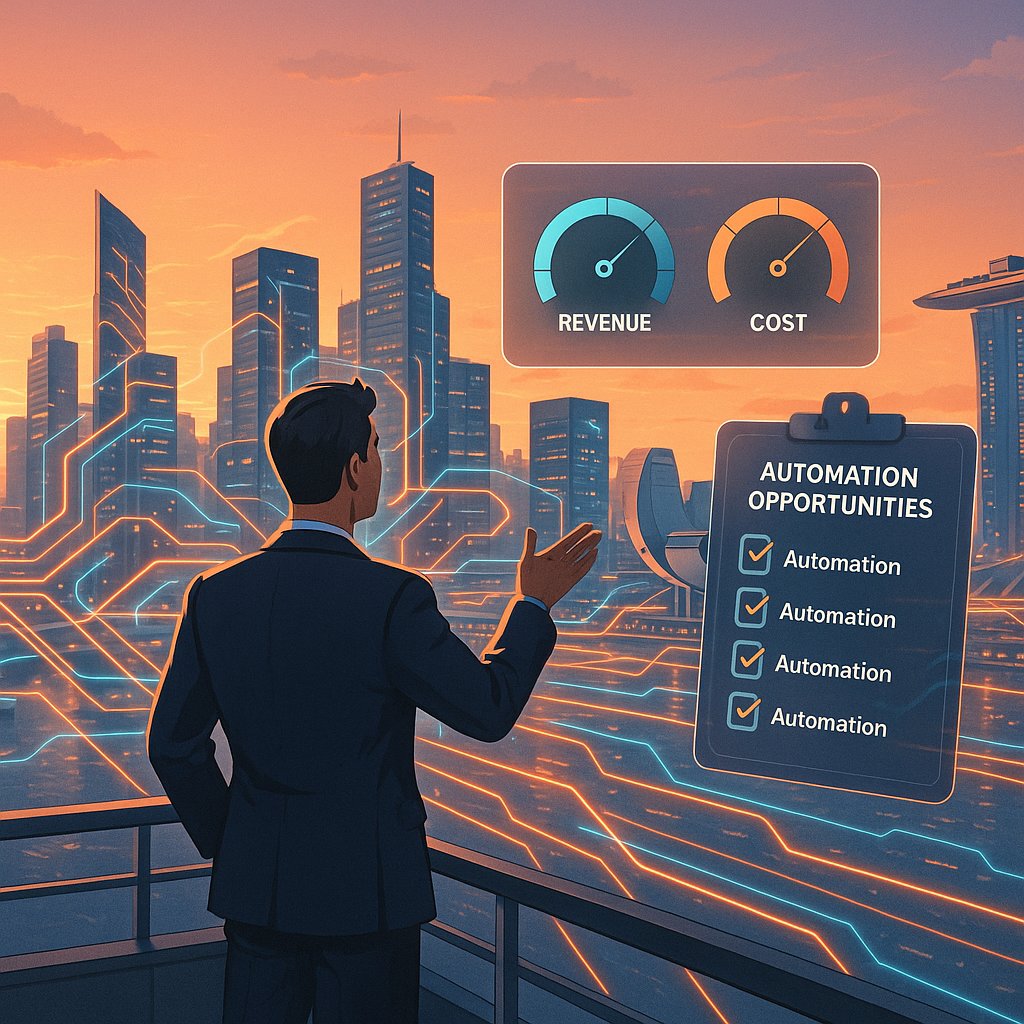
Table of Contents
- Overview: Why Automation-Led Growth Matters When You Buy in Singapore
- Pre-Acquisition: Quantifying Automation Upside Before You Commit
- Post-Completion Phase 1: Stabilise, Then Automate Cash and Compliance First
- Post-Completion Phase 2: Sales, Marketing, and Service Automation for Revenue Growth
- Phase 3: AI, Analytics, and Commercial Performance Optimisation
- Conclusion: Make Automation Part of Your Deal Thesis, Not an Afterthought
- FAQ
- Work with Bizlah
Overview: Why Automation-Led Growth Matters When You Buy in Singapore
Expert Insight: According to hnsconsult.com, HNS Consult lists curated businesses for sale in Singapore—ranging from SMEs to long-established enterprises—backed by experienced broker guidance so buyers can proceed with clarity and confidence in their decisions (https://hnsconsult.com/pages/business-for-sale). (hnsconsult.com)
When you buy a business for sale in Singapore, you are not just acquiring revenue and assets – you are buying a starting point for systems and automation. Learn more: Sell or Buy a Business.The biggest upside often comes after the deal, when you use technology, AI, and process automation to unlock higher margins and faster, more predictable growth.
Listings on platforms like BusinessForSale.sg, specialist brokers such as HNS Consulting, and advisory firms like Shook Lin & Bok corporate services show a wide range of SMEs and micro-businesses for sale – from beauty salons and service firms to e-commerce, vending, and B2B services. Many are still run on spreadsheets, manual approvals, and founder memory. That is your opportunity.
This article focuses on what to do once you have decided to buy: how to design automation-led growth strategies that fit the Singapore context, your industry, and your financing structure, without repeating generic digital transformation advice covered elsewhere.
Pre-Acquisition: Quantifying Automation Upside Before You Commit
Before you sign an option or issue a Letter of Intent, build a simple, automation-focused view of upside. This helps you avoid overpaying for manual processes while clearly seeing where software and AI can create post-acquisition value.
1. Scan listings for automation gaps you can fix
When you review a business for sale in Singapore or sector listings like services businesses for sale, look beyond the headline revenue. In your first calls and site visits, ask concrete questions about:
- Lead capture: Are enquiries coming in by WhatsApp, phone, and Instagram DM with no CRM?
- Sales follow-up: Is there any automated email, SMS, or retargeting, or is everything manual?
- Operations: Are bookings, inventory, and scheduling still on paper or basic Excel?
- Accounting: Are invoices and bank reconciliations manual, or already integrated with cloud accounting?
- Reporting: Does the owner have daily/weekly dashboards, or only end-of-month numbers from their accountant?
Each manual process is a potential automation win. Your aim is not to criticise the seller, but to map tangible levers you can pull post-completion.
2. Estimate an “automation uplift” instead of a vague optimism premium
Borrow ideas from digital transformation frameworks by firms like PwC Singapore and AI business strategy guidance from PwC US. Translate them into a simple numeric view:
- Revenue uplift: How much more could revenue grow if you automate lead capture, nurturing, and cross-sell? For example, +10–20% annual revenue from better conversion and higher order values using personalised offers.
- Margin uplift: If staff spend 30–40% of time on low-value admin, what happens when half of that is automated? That might be +3–8 percentage points in net margin.
- Working capital impact: Faster invoicing and collections via automation can trim debtor days – crucial if you are taking on acquisition financing or personal loans to fund the deal.
Frame your valuation and deal structure around what you can realistically automate in the first 6–18 months, not a generic “turnaround” story.
3. Choose automation-friendly business models from the outset
Certain models are naturally better suited to automation-led growth in Singapore:
- E-commerce and omni-channel retail: As outlined in the Singapore e-commerce guide by Latent and Grof on VeryWisely, these businesses integrate well with accounting automation, AI assistants, and marketing automation.
- Vending and unattended retail: Singsaver’s vending machine business guide highlights how telemetry, cashless payments, and route planning software can make a small footprint business highly automated.
- Systemised services: IT support, digital agencies, compliance services, and outsourcing firms can be scaled using ticketing, workflow, and AI-assisted delivery.
If you are still selecting targets, start with categories that naturally align with APIs, online payments, and structured workflows.
Post-Completion Phase 1: Stabilise, Then Automate Cash and Compliance First
Once the deal closes, resist the urge to rip out every system on Day 1. Your first priority is cash flow stability and regulatory compliance – and those are precisely the areas where targeted automation pays off quickly.
1. Move to clean, automation-ready accounting
As highlighted in the Singapore e-commerce and accounting automation primer on VeryWisely, modern stacks combine cloud accounting, integrated bank feeds, and AI-driven transaction classification.
- Upgrade to cloud accounting: If the business is still on desktop software or Excel, migrate to an online platform that supports automation (e.g. Xero, QuickBooks Online, or a local equivalent).
- Automate bank and wallet feeds: Connect all Singapore bank accounts, PayNow corporate QR, card processors, and e-commerce wallets. Set up rules to auto-categorise recurring transactions.
- Digitise billing and collections: Use recurring invoices, payment links, and automated reminders to reduce debtor days, critical if you are servicing acquisition loans.
This foundation also reduces manual errors and makes IRAS and ACRA compliance easier with accurate, up-to-date data.
2. Introduce light-touch workflow automation around compliance
You do not need full-blown ERP on day one. Focus on compact, high-ROI automations:
- Expense approvals: Simple email or chat-based approval flows that log to your accounting system.
- Payroll and CPF: Use local payroll software with recurring settings, automated CPF calculations, and template payslips.
- Document management: Store key corporate, tax, and licence documents in a structured cloud folder with clear naming rules, enabling future AI-powered search and retrieval.
3. Clarify data ownership and access early
When transitioning from the previous owner, ensure automation is not blocked by missing logins or unclear data rights:
- Get admin access to all domains, hosting, emails, ad accounts, marketplaces, and payment gateways.
- Centralise credentials in a secure password manager and assign roles for staff.
- Export historic data from legacy systems before they are shut down; you will need this for AI analytics and performance benchmarking later.
This stage is about making the business legible to software and AI: clean books, predictable cash collection, and auditable workflows.
Post-Completion Phase 2: Sales, Marketing, and Service Automation for Revenue Growth
With cash and compliance under control, shift your automation efforts to top-line growth. Singapore SMEs often underuse sales and marketing automation tools, leaving leads untracked and customers under-served.
1. Build a simple but robust sales automation backbone
Leverage guidance from platforms like HashMicro’s overview of sales automation tools to design a lean tech stack:
- Central CRM: Consolidate leads from website forms, WhatsApp, Facebook/Instagram DMs, Shopee/Lazada chats, and phone calls into one CRM.
- Automated follow-ups: Set rules-based email/SMS sequences for new enquiries, abandoned carts, and dormant customers.
- Task automation for sales staff: Auto-create tasks when a quote is not approved within a set timeframe, or when a high-value lead clicks pricing pages multiple times.
For service businesses listed on services-businesses-for-sale directories, this alone can increase conversion rates without adding headcount.
2. Integrate e-commerce, social commerce, and offline channels
The VeryWisely guide emphasises that Singapore’s marketplaces (Shopee, Lazada), own stores (Shopify, WooCommerce), and social commerce (TikTok, Instagram) each have distinct roles. Your automation plan should connect them:
- Unified product and inventory management: Sync inventory across online store, marketplaces, and physical outlets to avoid overselling and stockouts.
- Centralised order management: Pull orders and customer data from all channels into one system; trigger automated picking, packing, and shipping notifications.
- Cross-channel remarketing: Use pixel-based retargeting and email flows to bring marketplace buyers back to your own store or loyalty programme, where you control margins and customer data.
3. Enhance customer service with AI and self-service
AI capabilities, as discussed in PwC’s AI predictions, make it realistic for SMEs to offer responsive support without bloating payroll:
- AI chat on website and WhatsApp: Handle FAQs, basic troubleshooting, and booking requests 24/7; escalate only complex cases to staff.
- Knowledge base and templated replies: Turn common questions into articles and reusable answers that your team and bots can use consistently.
- Post-purchase automation: Automated review requests, upsell offers, and referral incentives triggered by purchase events or milestones.
The result: more leads handled, faster response times, and more revenue per customer with minimal incremental labour.
Phase 3: AI, Analytics, and Commercial Performance Optimisation
Once core processes run on software rather than paper, you can layer in AI and deeper analytics to systematically improve pricing, product mix, and go-to-market decisions.
1. Turn operational data into continuous pricing and margin insights
KPMG’s guidance on improving commercial performance emphasises disciplined use of data to refine offers and pricing. In a Singapore SME, you can replicate this at a smaller scale:
- Product-level profitability: Use your accounting and inventory data to calculate gross margin by SKU or service line, not just overall.
- Dynamic discount rules: Codify when discounts are allowed, automate approvals, and track impact on margin, especially in highly competitive sectors like e-commerce and beauty.
- Customer segment analysis: Identify which customer groups yield higher lifetime value and lower support costs, then direct automation (ads, sequences, offers) to attract more of them.
2. Use AI to assist forecasting and operational decisions
With a year of clean data from your newly automated systems, basic AI tools can meaningfully improve planning:
- Demand forecasting: Use AI-enhanced analytics to predict demand by SKU/store, feeding into your purchasing and inventory rules.
- Staffing optimisation: Align rosters with forecasted footfall or online order peaks to avoid both overstaffing and service bottlenecks.
- Churn prediction: Detect customers likely to lapse and trigger tailored save campaigns via email, SMS, or ads.
You do not need to build proprietary AI; many SaaS tools bundle predictive features that plug directly into your CRM, POS, and accounting systems.
3. Align financing and investment with your automation roadmap
Singapore-focused finance content like Singsaver’s coverage of AI-related investments reflects growing local interest in AI as an asset. For SME owners, the investment priority is internal automation, not just listed AI stocks.
- Fund automation, not just acquisition: When structuring acquisition financing or working capital lines, earmark a portion specifically for systems and automation, with clear milestones.
- Measure ROI by cohort and feature: Track performance before and after key automations – for example, the revenue and margin impact of implementing CRM automations vs. AI chat vs. inventory forecasting.
- Plan for resale value: Well-documented, automated processes and clean data will increase your eventual exit valuation when you later list your own business for sale in Singapore.
4. Build a small, automation-minded leadership cadence
Borrow from enterprise digital transformation playbooks (like those by PwC Singapore) and adapt to SME scale:
- Hold a monthly automation review: What broke, what worked, what should be standardised?
- Maintain a live backlog of automation ideas ranked by impact and ease, from no-code tweaks to deeper integrations.
- Assign clear owners for each stream: finance automation, sales and marketing, operations, and analytics.
This cadence keeps your business evolving, instead of freezing at the manual processes you inherited at acquisition.
Conclusion: Make Automation Part of Your Deal Thesis, Not an Afterthought
Automation-led growth is no longer optional when you buy a business for sale in Singapore. Rising manpower costs, customer expectations for speed, and intense digital competition mean that manual-only models quickly hit a ceiling.
To turn your acquisition into a scalable asset:
- Before buying: Target models where automation can clearly lift revenue and margins, and quantify that potential as part of your valuation.
- Right after completion: Stabilise cash and compliance with cloud accounting, bank feed automation, and basic workflow controls.
- Next: Deploy sales, marketing, and service automation to increase conversion, order value, and customer lifetime value.
- Then: Layer on AI and analytics to refine pricing, inventory, and commercial performance, guided by clean, automated data flows.
If you are evaluating your next move, start by browsing a curated business for sale in Singapore and mapping – line by line – where automation could create value within 12–24 months. Treat that automation roadmap as central to your deal thesis, and you will be far better positioned to turn a solid SME into a scalable, systemised asset.
FAQ
Q: How do I evaluate the automation potential of a business before buying it in Singapore?
A: Start by mapping core workflows (sales, operations, finance, customer service) and identifying tasks that are repetitive, rules-based, or spreadsheet-heavy. Then estimate time saved, error reduction, and impact on revenue if these were automated, and compare this upside against the investment needed and local tech talent or vendor availability.
Q: What should I automate first after acquiring a business in Singapore?
A: Prioritize automations that improve cash flow and customer experience, such as invoicing and collections, lead capture and follow-up, and customer support ticket routing. These typically deliver fast ROI, free up staff capacity, and create cleaner data for more advanced AI and analytics later on.
Q: How can AI practically help grow a newly acquired business in Singapore?
A: AI can power smarter lead scoring, personalized marketing campaigns, and dynamic pricing or product recommendations based on local customer behavior. It also helps automate routine tasks like summarizing customer conversations, generating first-draft proposals, and forecasting demand to optimize inventory and staffing.
Q: Which sales automations are most effective in the Singapore market?
A: Focus on CRM-based automations such as automatic lead assignment, follow-up reminders, and pipeline stage updates tied to email or WhatsApp interactions. Combine these with localized email and message sequences that reflect Singapore’s business norms, short decision cycles, and multi-channel communication preferences.
Q: Are there financing tools that support automation-led growth after acquisition?
A: Yes, you can use revenue-based financing, working capital lines, or tech-specific loans to fund automation projects that have clear, measurable payback. In Singapore, some banks and fintechs also offer tools that integrate with your accounting or POS systems, letting you leverage real-time data to unlock more flexible financing as you scale.
Related Reading
Work with Bizlah
consultative CTA — explore Sell or Buy a Business.
- Local expertise in Singapore
- End-to-end guidance
- Transparent valuation
Informational only; not financial advice.